How a robot moves determines more about its cost, runtime and reliability than almost anything else in its design. The choice is usually made early and rarely revisited, which makes understanding the trade-offs worthwhile.
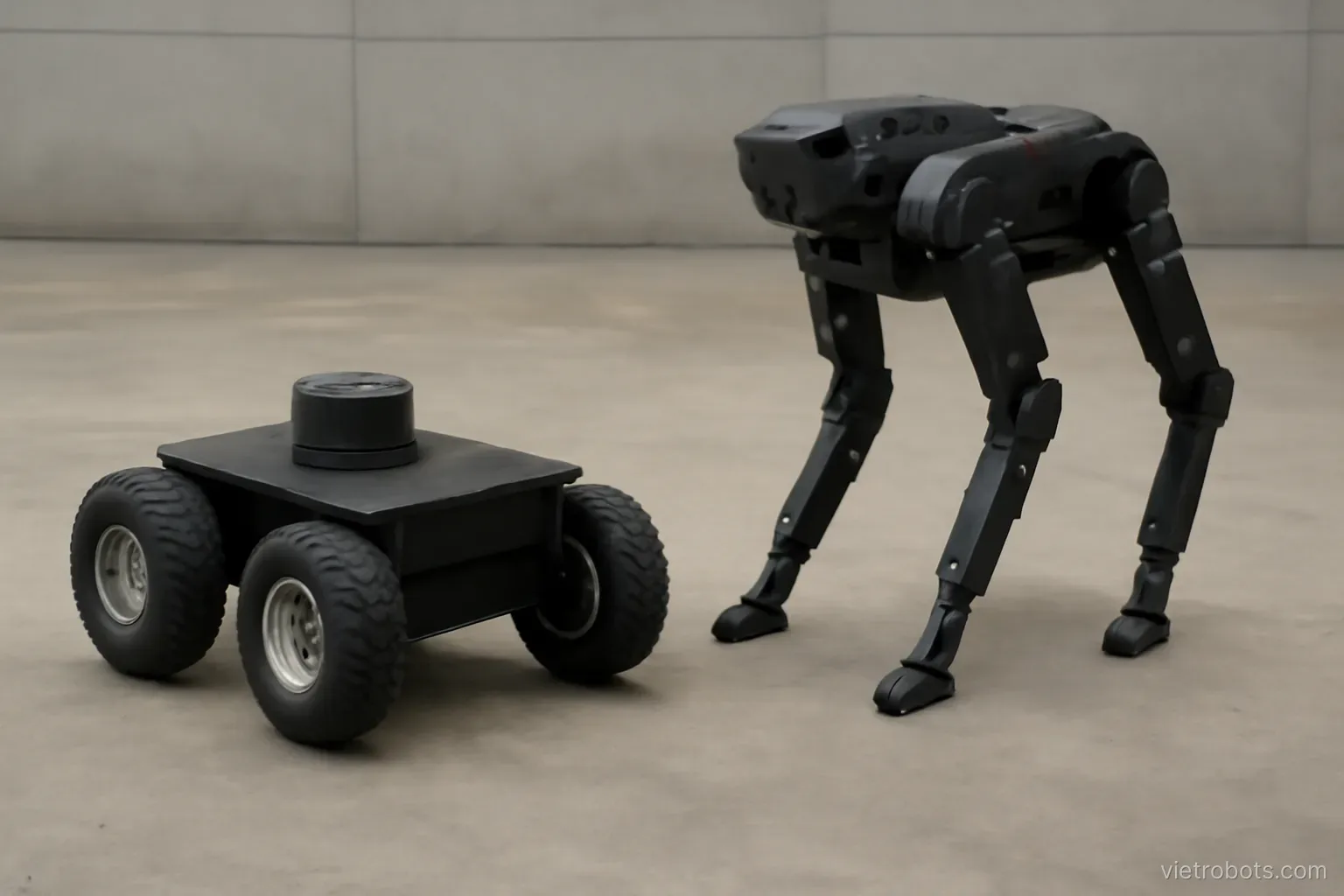
Wheels: the default for good reason
Efficiency. Rolling on a smooth surface costs a fraction of the energy that walking does. This single fact explains most of the deployment picture — wheeled robots run for most of a shift while legged ones run for hours.
Simplicity. Few moving parts, mature control, low failure rate. A differential drive base is one of the best-understood mechanisms in robotics.
Cost. Dramatically cheaper than legs at every scale.
Stability. Three or more contact points means it does not fall over, which removes an entire category of safety concern.
Limitations. Steps and thresholds. Loose or very uneven ground. Narrow gaps requiring a different footprint.
Where wheels win decisively. Indoor commercial and industrial spaces with flat floors — which is where the overwhelming majority of service and logistics robots operate.
The practical implication is that a wheeled base should be the default assumption, with the burden of proof on any alternative to justify the additional cost and complexity.
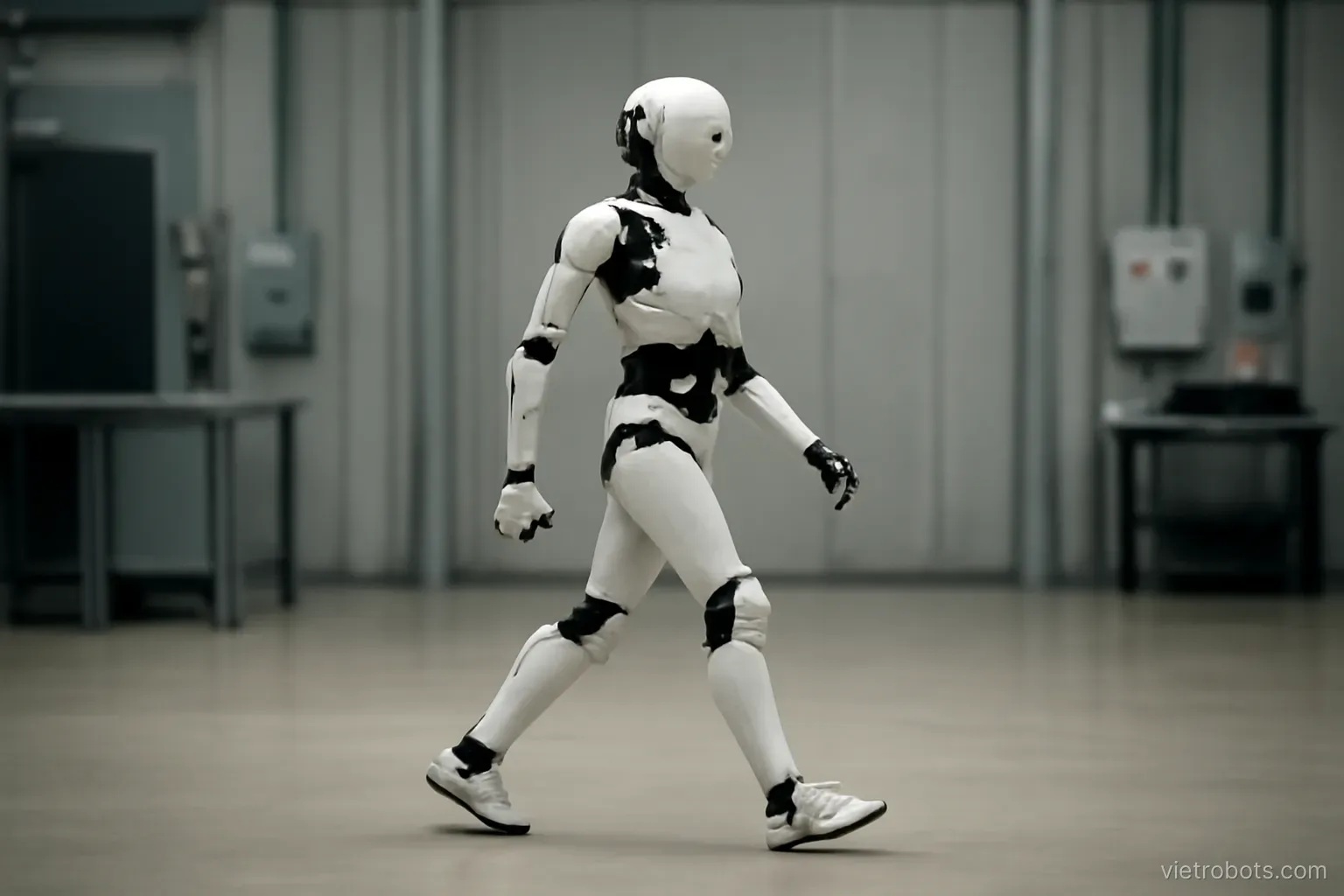
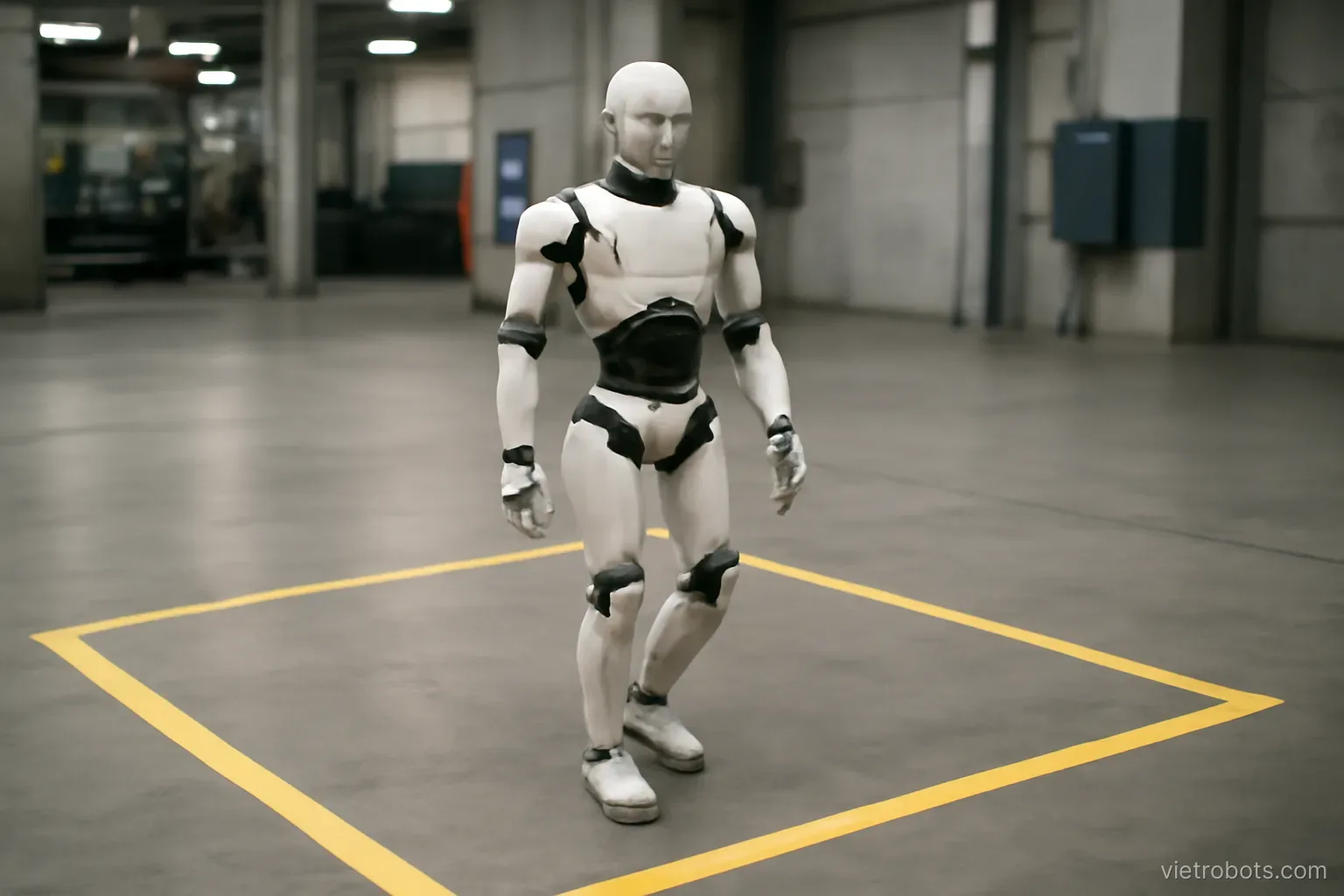
Legs: capability at a high price
What legs buy. Stairs. Genuinely uneven terrain. Stepping over obstacles. Narrow footprint with the ability to place feet precisely. Access to environments built for people without modification.
What legs cost. Energy, and therefore runtime. Mechanical complexity, and therefore reliability and maintenance. Control complexity. Money. And the possibility of falling, which brings safety constraints near people.
The balance problem. A legged robot is actively stabilising continuously. Standing still is not free, and disturbances — a push, a slip, a shifting load — must be handled in real time.
Where legs are genuinely necessary. Outdoor terrain, inspection of industrial sites with stairs and gratings, environments that cannot be modified and contain steps. These are real applications and they are a minority of robot work.
How to test whether you need them. Walk the intended route with a wheeled trolley of similar size. If the trolley completes it, legs are unnecessary.
Tracks and other alternatives
Options between the two extremes, often overlooked.
Tracks. Better on loose ground and small obstacles than wheels, more efficient and simpler than legs. Used in inspection and field robots. Downsides are floor damage indoors and poor turning efficiency.
Large-diameter wheels. Handle bigger obstacles than small wheels while keeping wheel efficiency. Often the cheapest way to add terrain capability.
Rocker-bogie and articulated suspensions. Passive mechanisms that keep wheels in contact over uneven ground without active control. Elegant and underused.
Wheel-legs. Wheels at the end of articulated limbs. Rolls efficiently on flat ground and walks over obstacles. Complex and promising.
Wheeled base with a stair-climbing mechanism. Specialised and effective where stairs are the only obstacle.
The general lesson: the choice is not binary. Many applications framed as requiring legs are better served by a wheeled base with a suspension or larger wheels, at a fraction of the cost.
Choosing for a specific application
A practical sequence.
One: survey the actual route. Every step, threshold, slope, surface change and narrow point. Measure rather than estimate.
Two: check what can be modified. A ramp, a removed threshold, a rerouted path. Environment modification is almost always cheaper than mobility capability.
Three: test with a trolley. A wheeled trolley of comparable dimensions, pushed along the route at a busy time.
Four: if the trolley succeeds, use wheels. The decision is made.
Five: if it fails, identify why. One step? A ramp solves it. Loose ground? Larger wheels or tracks. Stairs that cannot be avoided? Now legs or a specialised mechanism becomes a genuine candidate.
Six: cost the alternatives honestly. Including runtime, maintenance and the safety measures each requires.
Following this sequence, most applications resolve to wheels — and the ones that do not have a clear, specific reason, which is exactly the situation in which the extra cost is justified.
What changes and what does not
Looking forward without predicting timelines.
Likely to improve. Legged control, robustness of walking, cost of actuators as volumes rise, and battery energy density at the gradual rate it has historically improved.
Unlikely to change. The energy advantage of rolling over walking. This is physics, not engineering, and it will keep wheels dominant wherever floors are flat.
Also unlikely to change. The reliability advantage of fewer moving parts, and the cost advantage that follows from it.
What this implies. Legged robots will keep improving and will find their applications in environments that genuinely require them. They are unlikely to displace wheeled bases in flat indoor commercial spaces, because there is nothing to gain there and a great deal to lose.
The likely long-term picture. A wide range of mobility types matched to environments, rather than convergence on one. That is the pattern in every other machine category, and there is no particular reason robots would differ.
Frequently asked questions
Why do wheeled robots dominate deployments?
Energy efficiency above all — rolling on a smooth surface costs a fraction of what walking does, so wheeled robots run for most of a shift while legged ones run for hours. Plus lower cost, higher reliability and no falling.
How do you test whether legs are needed?
Push a wheeled trolley of similar size along the intended route at a busy time. If the trolley completes it, legs are unnecessary and the extra cost buys nothing.
What options exist between wheels and legs?
Tracks, large-diameter wheels, passive articulated suspensions, and wheel-legs. Many applications framed as needing legs are better served by a wheeled base with larger wheels or a suspension, at a fraction of the cost.
What will not change about this trade-off?
The energy advantage of rolling over walking. That is physics rather than engineering, and it will keep wheels dominant wherever floors are flat regardless of how much legged control improves.
More in Robots and jobs and Voice and language.