Lists of robot limitations date quickly. The reasons behind them do not, and knowing the reasons lets you evaluate any new claim rather than memorising what is currently impossible.
Handling soft and deformable things
The hardest general category and the one furthest from solved.
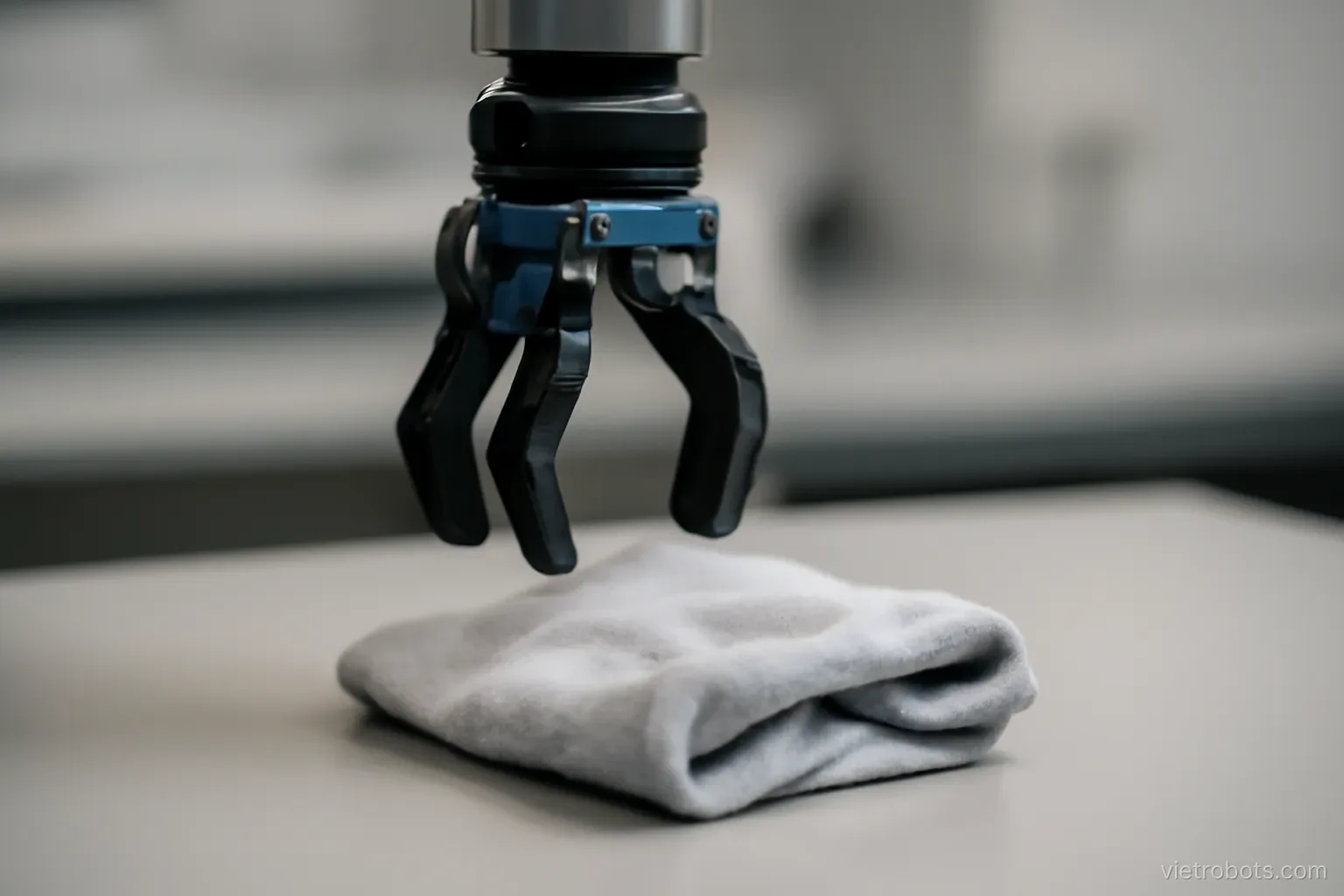
What falls in it. Cloth, cable, food, packaging film, paper, anything that changes shape when touched.
Why it is hard. The shape when grasped differs from the shape when released, and it differs unpredictably. A rigid object has a fixed geometry the robot can reason about; a folded shirt has effectively infinite configurations.
Why it matters commercially. Enormous amounts of work involve soft materials — laundry, food preparation, textile manufacture, cable assembly, packaging. These remain manual almost everywhere.
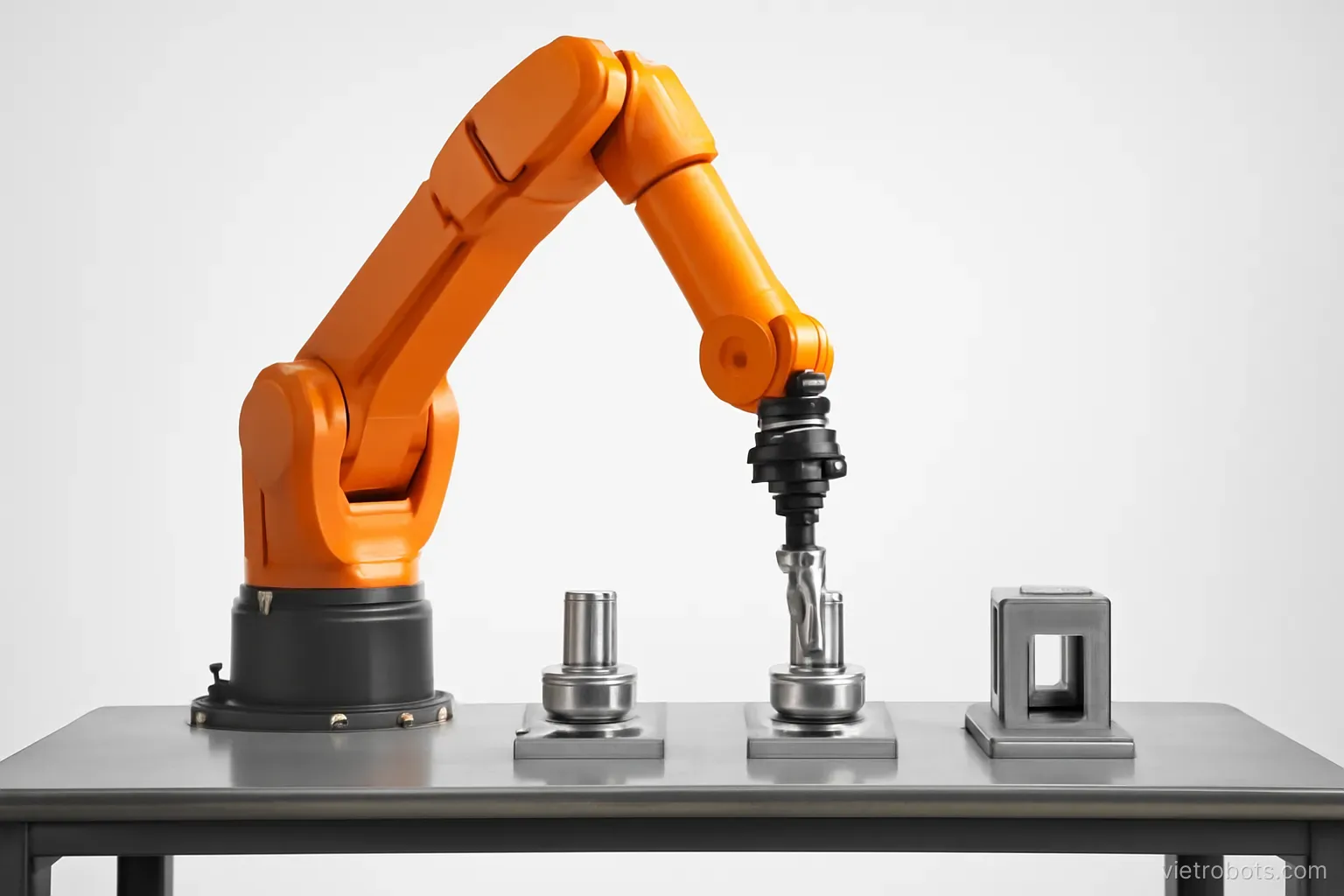
What partial solutions exist. Specialised tooling for one specific item works well. A gripper designed for one type of bag handles that bag reliably and nothing else.
How to recognise the claim. A demonstration folding one specific towel repeatedly is a very different capability from handling arbitrary laundry, and the two look similar in a thirty-second video.
Working in unstructured spaces
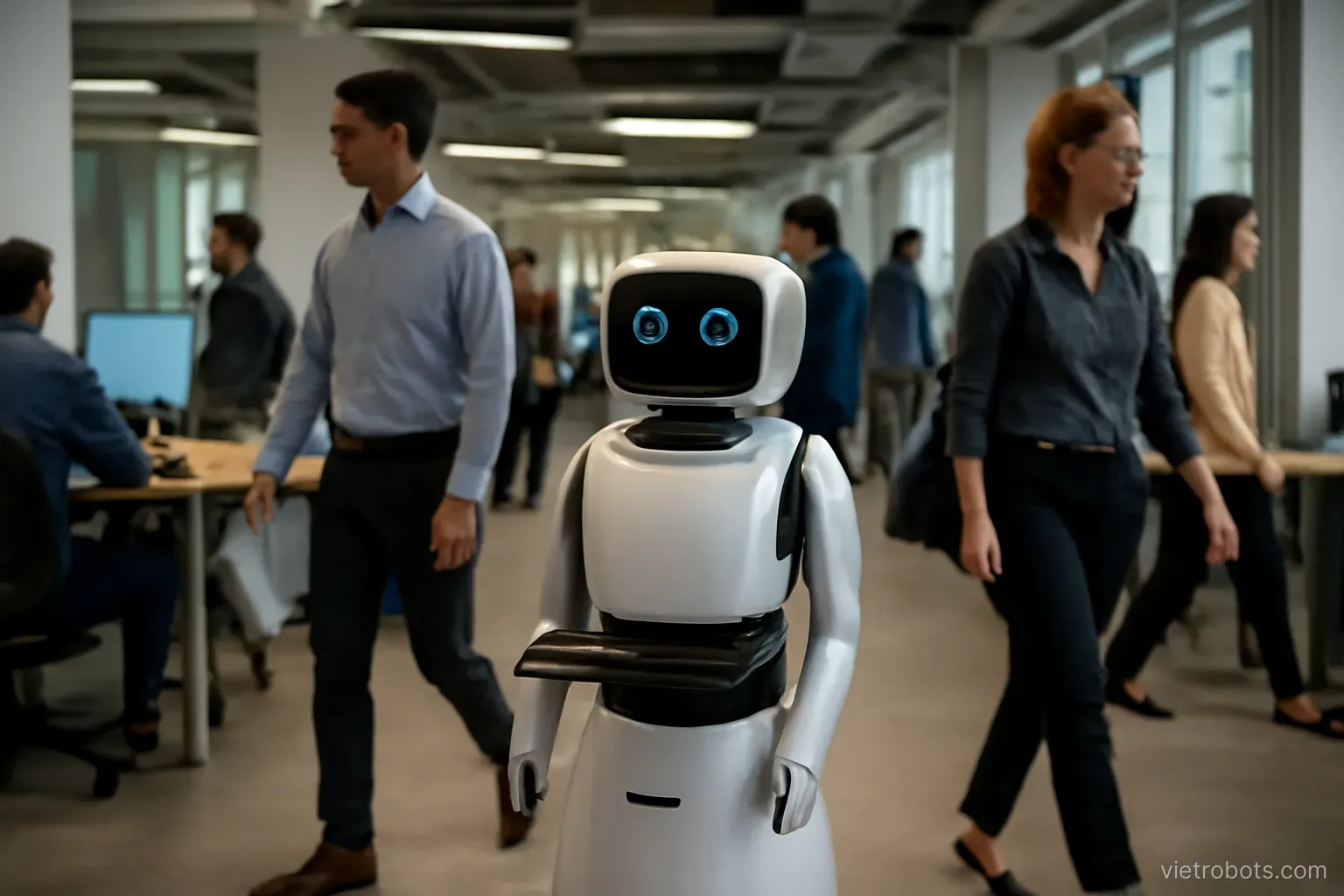
What falls in it. Homes, construction sites, outdoor terrain, cluttered workshops, crowded public spaces.
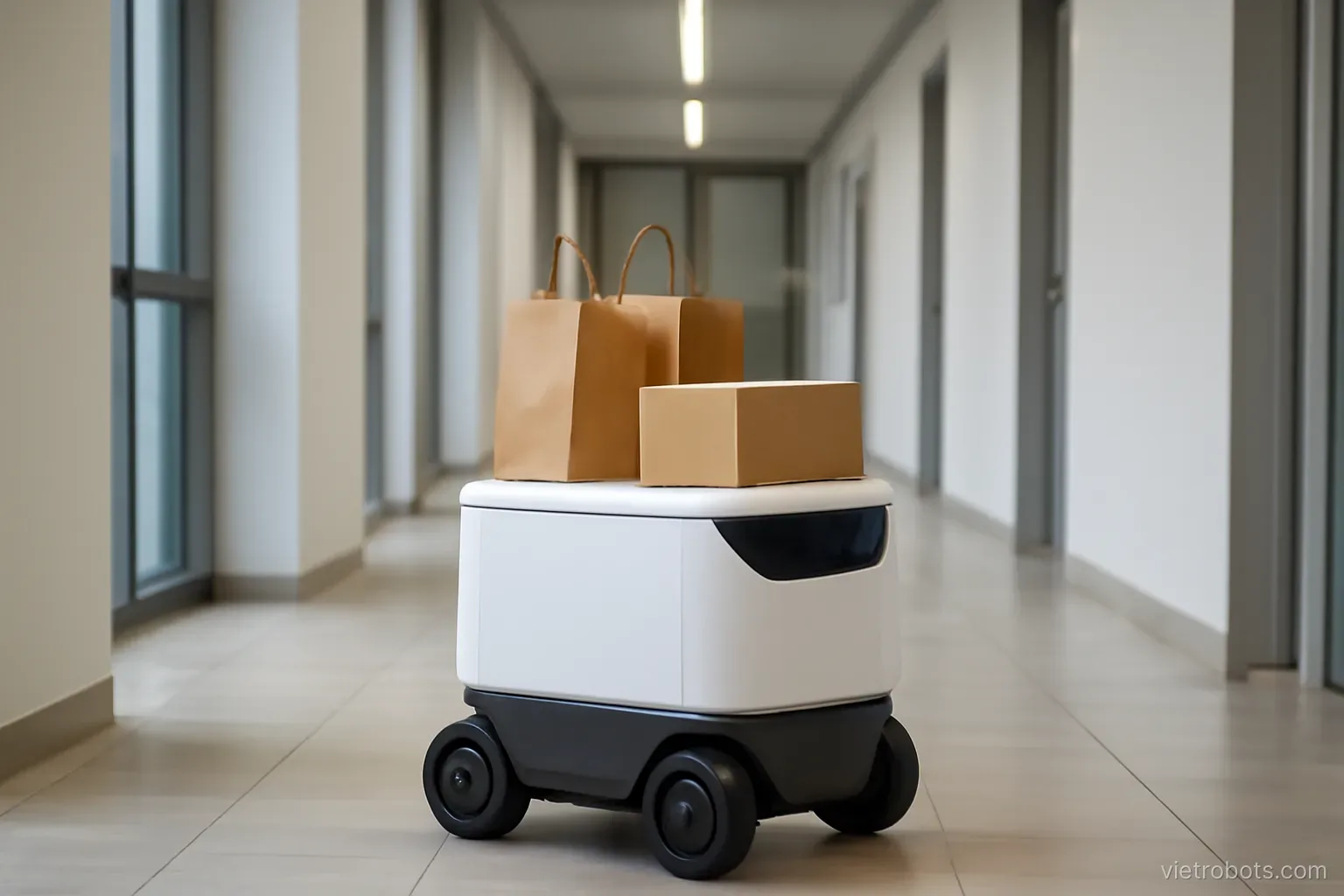
Why it is hard. Everything changes. Objects move, lighting varies, surfaces differ, obstacles appear. A mapped corridor is a solved problem precisely because it does not change.
The specific difficulties. Recognising what things are when they appear in unfamiliar positions. Navigating around obstacles that were not there yesterday. Coping with surfaces the robot has not encountered.
Why homes are particularly hard. They combine everything difficult: clutter, soft materials, steps, pets, children, and an owner who reasonably expects the robot to adapt rather than the house to be adapted.
What works instead. Adjusting the environment — clearing routes, standardising item positions, controlling lighting. This is why industrial and commercial deployments succeed where domestic ones do not: businesses will change their space, households will not.
Long sequences where each step depends on the last
A less obvious limitation with large practical consequences.
What falls in it. Preparing a meal, assembling a complex product, tidying a room, any task where the result of step three determines what step four should be.
Why it is hard. Errors compound. A robot with a ninety-five per cent success rate per step completes a ten-step sequence successfully only about six times in ten. And unlike a person, it usually cannot recognise that step three went subtly wrong and adjust.
The practical workaround. Break long sequences into short independent ones with verification between them. This is why industrial cells are structured as discrete verified operations rather than as continuous processes.
How to recognise the claim. A demonstration of a long autonomous sequence should prompt the question of how many consecutive successful runs have been achieved, because that number is what matters and it is rarely offered.
Genuinely novel situations
What falls in it. Anything the system has not encountered in training and that differs enough from what it has.
Why it is hard. Current systems generalise within the range of their training and degrade outside it, often without any signal that they have left familiar territory. A person knows when they are out of their depth; a robot usually does not.
The dangerous property. Failure without warning. A robot that has never seen a particular situation may act confidently and wrongly rather than stopping.
The engineering response. Bound the situations the robot will encounter, detect when it is outside them, and hand over to a person. Every well-designed deployment does this, and it is the single most important safety property in customer-facing applications.
How to recognise the claim. Ask what the robot does when it encounters something unfamiliar. A specific answer describing detection and handover indicates a well-engineered system; a claim that it adapts to anything indicates the opposite.
Using this to evaluate claims
The reasons above give a practical test for any new capability claim.
Does it involve soft or deformable materials? If yes, ask how many different items, not just how well it handles the demonstrated one.
Does it happen in an unstructured space? If yes, ask whether the space was prepared and how much.
Is it a long dependent sequence? If yes, ask for consecutive successful completions, not single-run footage.
Does it require handling the unfamiliar? If yes, ask what happens when it encounters something outside its range.
And the general question. How many times, with how many different objects, in how many different settings. Three numbers that answer most claims, and whose absence is itself informative.
Progress in this field is real and continuing. The reasons above are why it is slower than short videos suggest, and they will remain useful for evaluating claims long after any specific list of limitations goes out of date.
Frequently asked questions
Why are soft materials so difficult?
Because the shape when grasped differs unpredictably from the shape when released. A rigid object has a fixed geometry the robot can reason about; a folded cloth has effectively infinite configurations.
Why do long task sequences fail?
Because errors compound. Ninety-five per cent success per step gives roughly six successes in ten over a ten-step sequence, and unlike a person the robot usually cannot recognise that an earlier step went subtly wrong.
What is the dangerous property of novel situations?
Failure without warning. Current systems degrade outside their training range often without any signal, so a robot may act confidently and wrongly rather than stopping — which is why detection and handover matter so much.
How should any capability claim be tested?
Ask how many times, with how many different objects, in how many different settings. Those three numbers answer most claims, and their absence is itself informative.
More in Robots and jobs and Robots in Vietnamese business.