Setting aside what will be possible later, here is what AI robots are actually doing in workplaces today — and, more usefully, the shared properties that explain why these jobs and not others.
Carrying things between fixed points
The most reliable category by a wide margin.
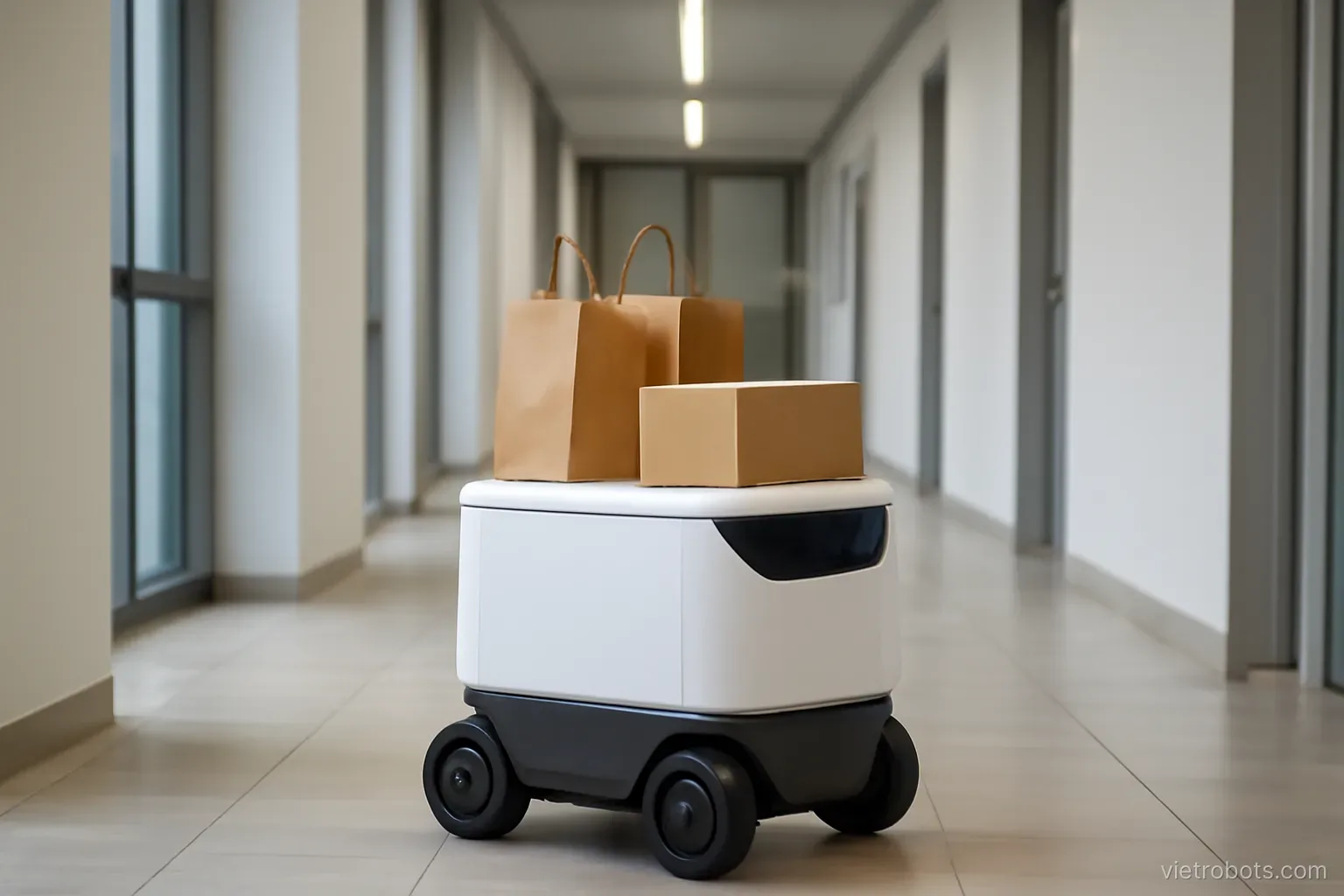
Where it runs. Restaurants carrying food to table areas. Hotels delivering to rooms. Hospitals moving samples and supplies. Offices and factories moving documents and parts. Warehouses moving stock.
Why it works. The route is known, the destination is known, and the robot never has to decide anything. Navigation in mapped indoor space is mature technology.
Measurable value. Trips per shift and distance staff no longer walk. In large facilities this figure is consistently higher than people estimate before measuring.
Where it fails. Blocked aisles — the leading cause everywhere. Nobody unloading. Doors it cannot open. Steps and level changes without lift integration.
What makes deployments succeed. One clear route kept free, a defined procedure for loading and unloading, and staff habit. The technology is rarely the limiting factor.
Answering repeated questions
The second most reliable category and the cheapest to deploy.
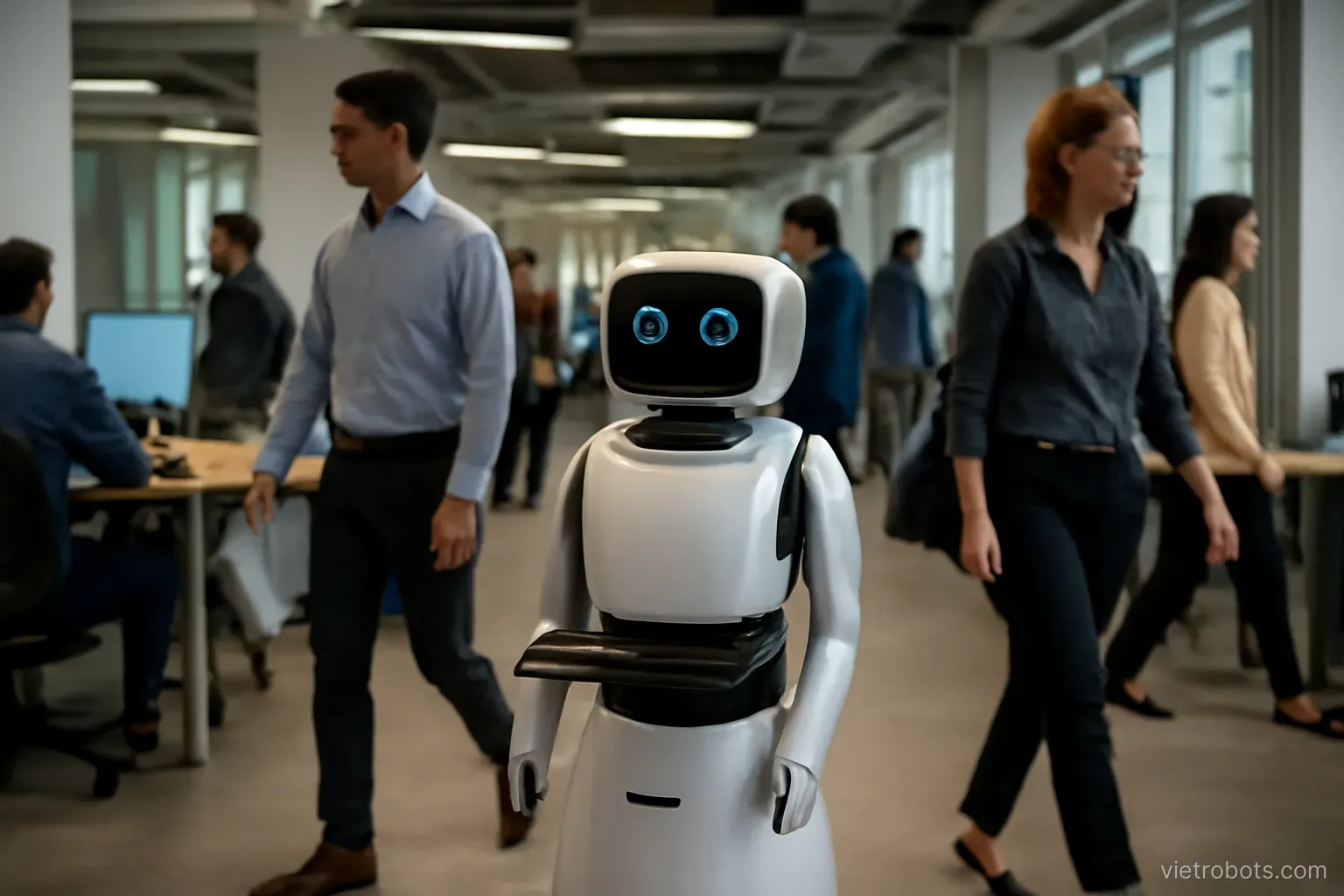
Where it runs. Building lobbies, hotel receptions, showrooms, sales galleries, public service halls, hospital entrances.
Why it works. A large share of questions at any reception are the same ones. The content is stable, the answers are known, and getting one wrong is usually harmless.
Measurable value. Questions handled without reaching staff, and visitors served during periods when nobody is available.
Where it fails. Stale content — the leading cause. Noisy environments. Placement outside the visitor traffic flow. And no handover path when a question exceeds scope.
What makes deployments succeed. Someone named to keep content current, a visible way to reach a person, and placement where visitors actually pause. Again, none of these are technical.
Guiding and presenting along a route
Reliable within specific conditions.
Where it runs. Showrooms, factory tours, building orientation, sales galleries, museums and exhibitions.
Why it works. Fixed route, fixed content, and every visitor receives the complete presentation — something a human guide struggles to sustain past the twentieth repetition of a day.
Measurable value. Staff freed from repetitive guiding, plus consistency of information.
Where it fails. Visitors walking faster than the robot and leaving it behind. Inadequate volume so people at the back stop listening. Furniture moved so the map no longer matches. And crowds.
What makes deployments succeed. Small groups, an explicit invitation to follow, the robot speaking while moving, and checking the group is ready before leaving each stop.
Routine inspection and recording
Less visible, well suited, and under-deployed.
Where it runs. Facility patrols, meter reading, checking gauges and indicators, photographing checkpoints, environmental monitoring.
Why it works. Repetitive, fixed route, stable content — the robot's strong area. And it is work people skip because it is dull, so the comparison baseline is often incomplete human records.
Measurable value. Complete and consistent records with timestamped evidence, and it runs overnight when nobody is present.
The important caveat. The robot records; it does not judge. Someone must read and act on the reports, and if nobody does, the exercise only generates data nobody reads.
Where it fails. Checkpoints not visible from where the robot can stand, inadequate lighting for photographs, and routes that change frequently.
What the working jobs have in common
Four shared properties, and they explain the boundary better than any list.
The environment is prepared or preparable. Flat floors, mapped space, adequate width, stable lighting. Where an environment can be adjusted for the robot, most problems disappear.
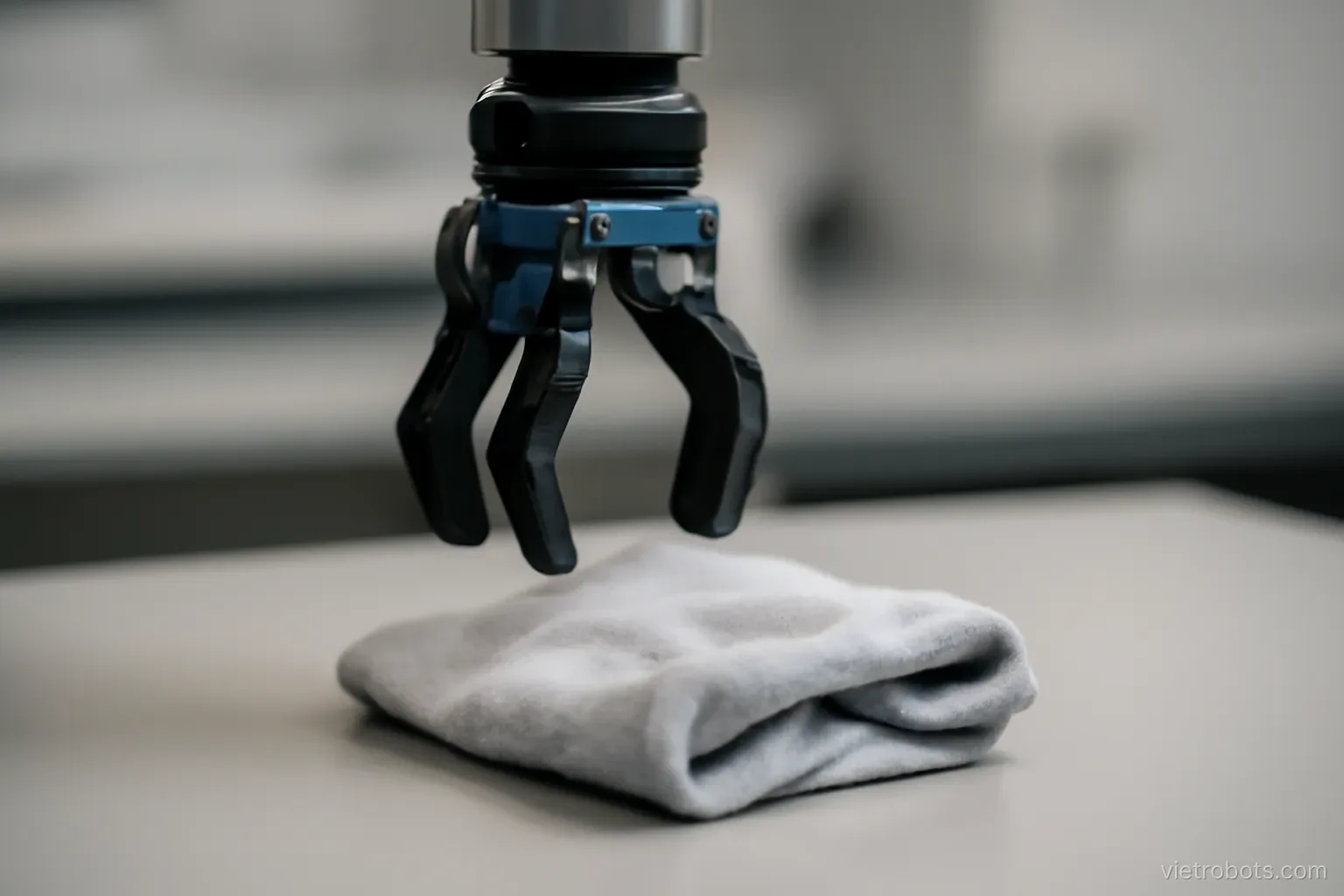
The task is talking or moving, not manipulating. Every reliable category above involves speech or navigation. None requires picking up unfamiliar objects.
Failure is harmless. A wrong direction, a missed checkpoint, a delayed delivery — inconvenient rather than damaging.
The task repeats enough to justify the setup. Setup cost is fixed; value scales with repetitions.
A fifth property worth noting. All four categories degrade gracefully. A delivery robot that stops in a corridor is an inconvenience someone clears in seconds; a reception robot that cannot answer transfers to a person; an inspection robot that misses a checkpoint leaves a gap in a record rather than causing damage. Applications where failure is expensive belong to a different risk category entirely and need far more engineering around them.
Applied as a test: a proposed application matching all four is likely to work; one missing two or more is likely to disappoint. This holds more reliably than any comparison of specifications.
Frequently asked questions
Which robot job is most reliable today?
Carrying things between fixed points in mapped indoor space. The route and destination are known, the robot decides nothing, and navigation in mapped interiors is mature technology.
What is the leading cause of stoppages for delivery robots?
Blocked aisles, everywhere. Followed by nobody unloading promptly. Both are human habit problems rather than technical ones, and both take a few weeks of adjustment to resolve.
What do all the reliably working jobs have in common?
A preparable environment, a task involving talking or moving rather than manipulating, harmless failure modes, and enough repetition to justify the fixed setup cost.
Why is inspection under-deployed despite being well suited?
Partly because it is unglamorous, and partly because it only pays off if someone actually reads the reports. Without that, it produces data nobody uses.
More in Voice and language and Cost and selection.