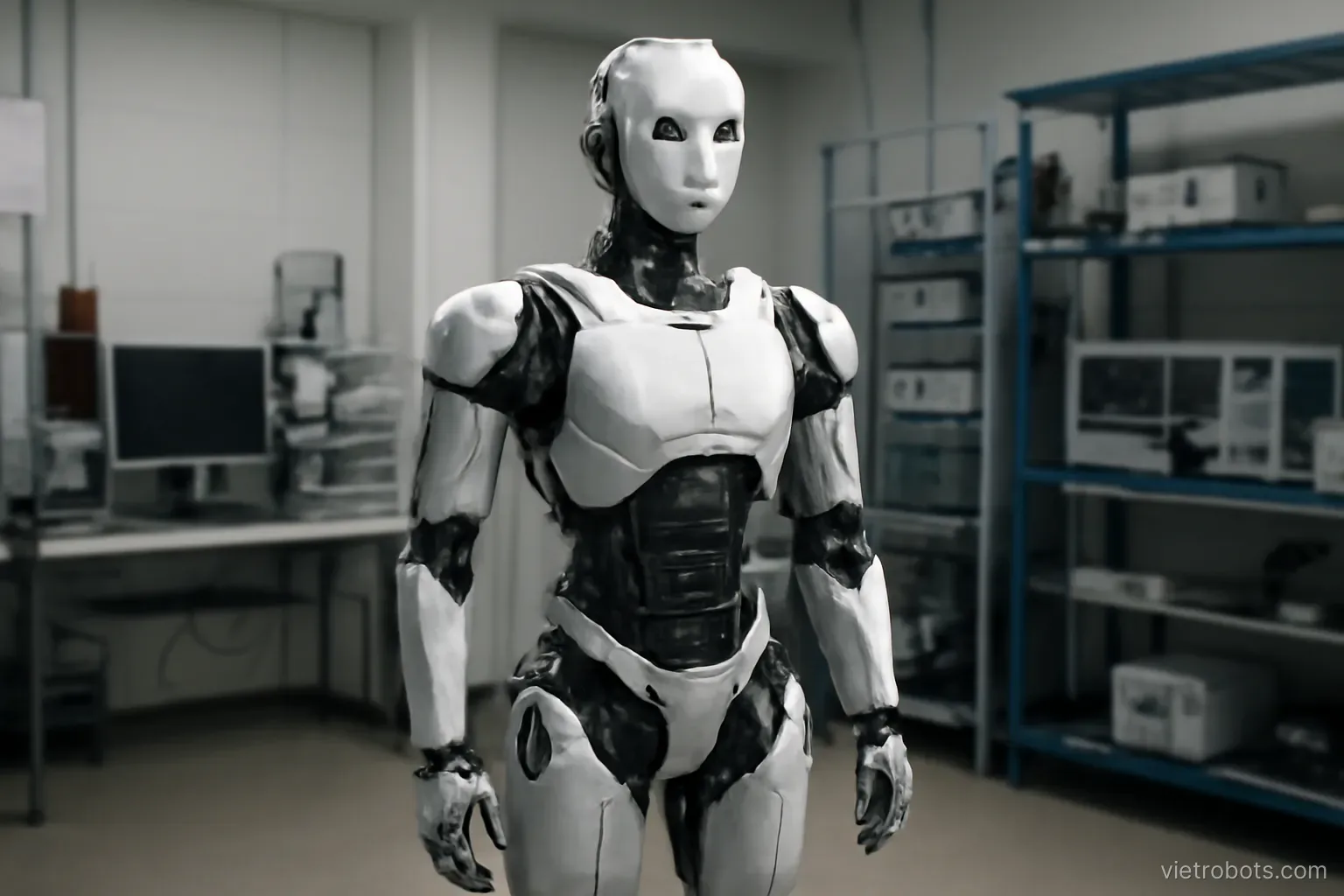
A human-shaped robot is harder to build, harder to control, more expensive and less reliable than a wheeled machine with an arm. There are real arguments for building one anyway, and they are narrower and more specific than the enthusiasm around the category suggests.
The argument that holds: the world is built for humans
The strongest case, and it is genuinely strong.
Stairs, doorways, handles, tools, benches, vehicles. Every one is dimensioned around a human body. A machine with the same proportions can use them without modification.
The alternative is modifying the world. Ramps for wheels, automatic doors, redesigned tools. Feasible in a new facility, expensive or impossible in an existing one.
Where this matters most. Older buildings, mixed environments, places where a robot must move through spaces designed for people and cannot have those spaces rebuilt.
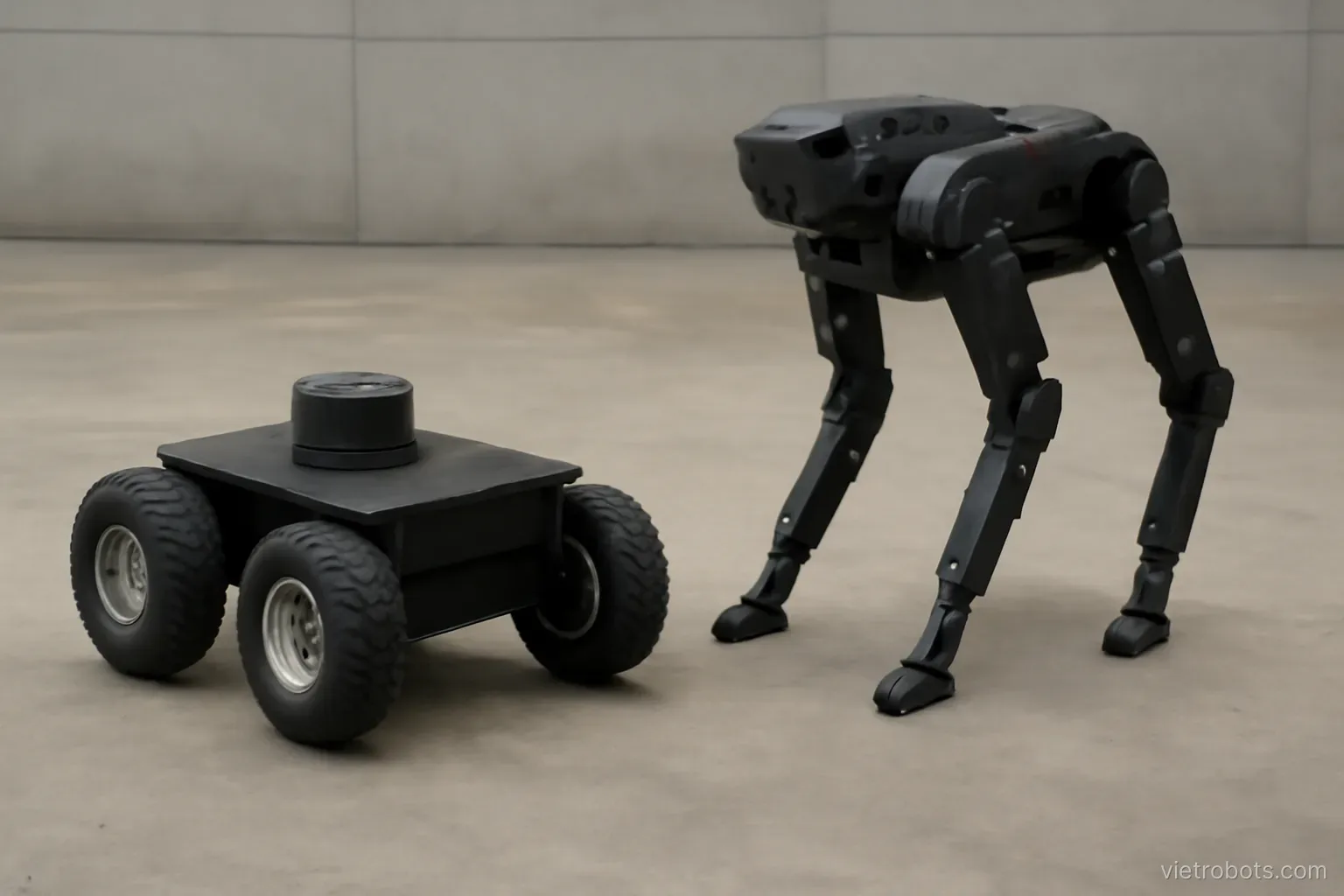
The counter-argument. In practice, modifying an environment is usually cheaper than a humanoid. A ramp costs very little; legs cost a great deal. This is why wheeled robots dominate deployed numbers despite the theoretical appeal of legs.
Where the argument is strongest. When a robot must serve many different environments and none can be modified — which is a real situation but a narrower one than it first appears.
The argument about general purpose
The argument driving most current investment, and the one most worth examining.
The claim. Rather than a specialised machine per task, one human-shaped robot could learn many tasks, the way a person does. Buy one machine, teach it what you need.
Why it is appealing. It would change the economics completely. Specialised automation requires enough volume to justify the engineering; a general machine would not.
What has to be true for it to work. The robot must learn new tasks cheaply, handle the variation of real environments, and be reliable enough to trust unsupervised. All three remain unsolved.
The honest position. This is a research bet, not a product claim. It may pay off and the timeline is genuinely uncertain.
What that means for a buyer today. Do not purchase a humanoid on the expectation that it will become general-purpose through updates. Evaluate what it does now.
The argument about interaction
Less discussed and better supported by evidence than the general-purpose argument.
People respond differently to a human form. They approach it, talk to it, photograph it, remember it. In customer-facing roles this is measurable value.
Gesture communicates. Pointing, turning to face someone, an open-handed gesture. These make interaction noticeably more natural than a screen on a pole, and they cost little to implement once arms exist.
Eye direction matters. Knowing where a robot is attending helps people know whether it is addressing them.
The downside of the same property. A human form raises expectations to human levels, so every limitation disappoints more sharply. A machine that looks like a machine gets more tolerance.
Where the interaction argument is strongest. Events, brand spaces, showrooms, education — anywhere the reaction of people is itself part of the value rather than incidental to it.
The arguments that do not hold
Worth stating so they can be recognised in a pitch.
Humanoids are more intelligent. Form has nothing to do with capability. A wheeled robot can run identical software.
Humanoids are the natural end point of robotics. Specialised machines outperform general ones at their specialty, and that is unlikely to reverse. Most robots will continue to be shaped by their task.
Humanoids will replace human workers directly. Even a capable humanoid would be deployed where its particular economics work, which is not the same as substituting for a person one for one.
Legs are necessary for real environments. Most indoor environments are wheelchair-navigable or can be made so, and wheels are dramatically more efficient, more reliable and cheaper.
The form is close to being solved. Balance while carrying variable loads, on varied surfaces, for hours, remains difficult, and battery life for legged machines remains short.
How to evaluate a humanoid claim
A practical test for any humanoid product or demonstration.
What does it do that a wheeled robot with an arm could not? If the answer is nothing, the form is being paid for without benefit.
How long does it operate on a charge, actually working? Legged machines spend energy standing still.
What surfaces and slopes has it handled outside a laboratory?
How many consecutive hours has it run in a real deployment?
What happens when it falls? Damage, recovery, and whether a person can lift it.
What does maintenance involve? More joints means more service.
And the framing question. If the value is attention and interaction, price it as such and measure it that way. That is a legitimate reason to buy a humanoid — it is simply a different reason from the one usually given, and confusing the two leads to disappointment.
Frequently asked questions
What is the strongest argument for the human form?
That the built environment is dimensioned around human bodies, so a machine with the same proportions can use stairs, doorways and tools without modification. The counter is that modifying an environment is usually cheaper than legs.
Is the general-purpose argument established?
No, it is a research bet. It requires cheap learning of new tasks, tolerance of real-world variation, and reliability without supervision — all three unsolved. Do not buy expecting updates to deliver it.
Where does the human form genuinely pay off today?
Where people's reaction is part of the value — events, brand spaces, showrooms, education. Gesture and eye direction make interaction noticeably more natural, and attention is measurable.
What question best tests a humanoid claim?
What does it do that a wheeled robot with an arm could not. If the answer is nothing, the form is being paid for without a corresponding benefit.
More in Myths and questions and AI robots for real work.