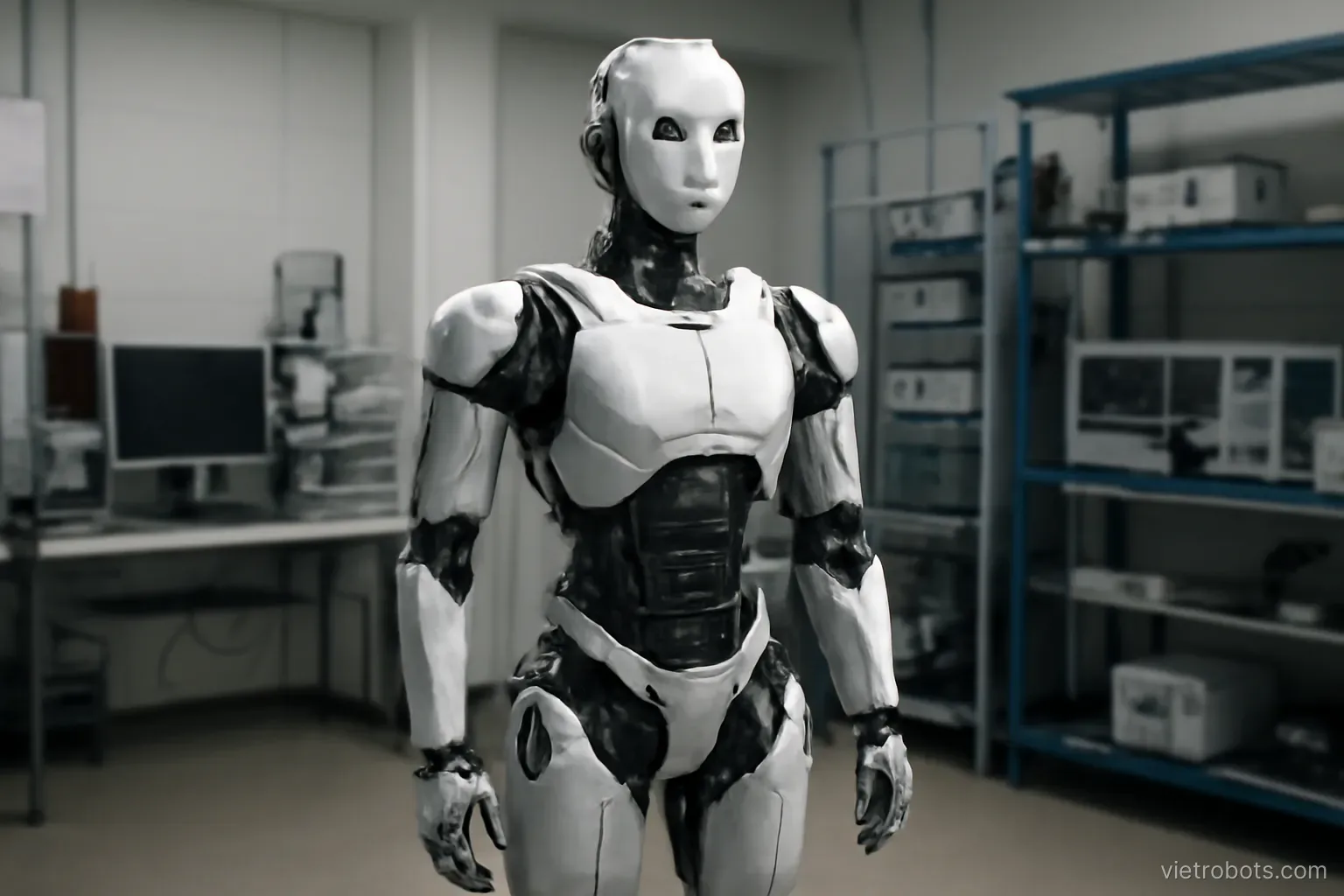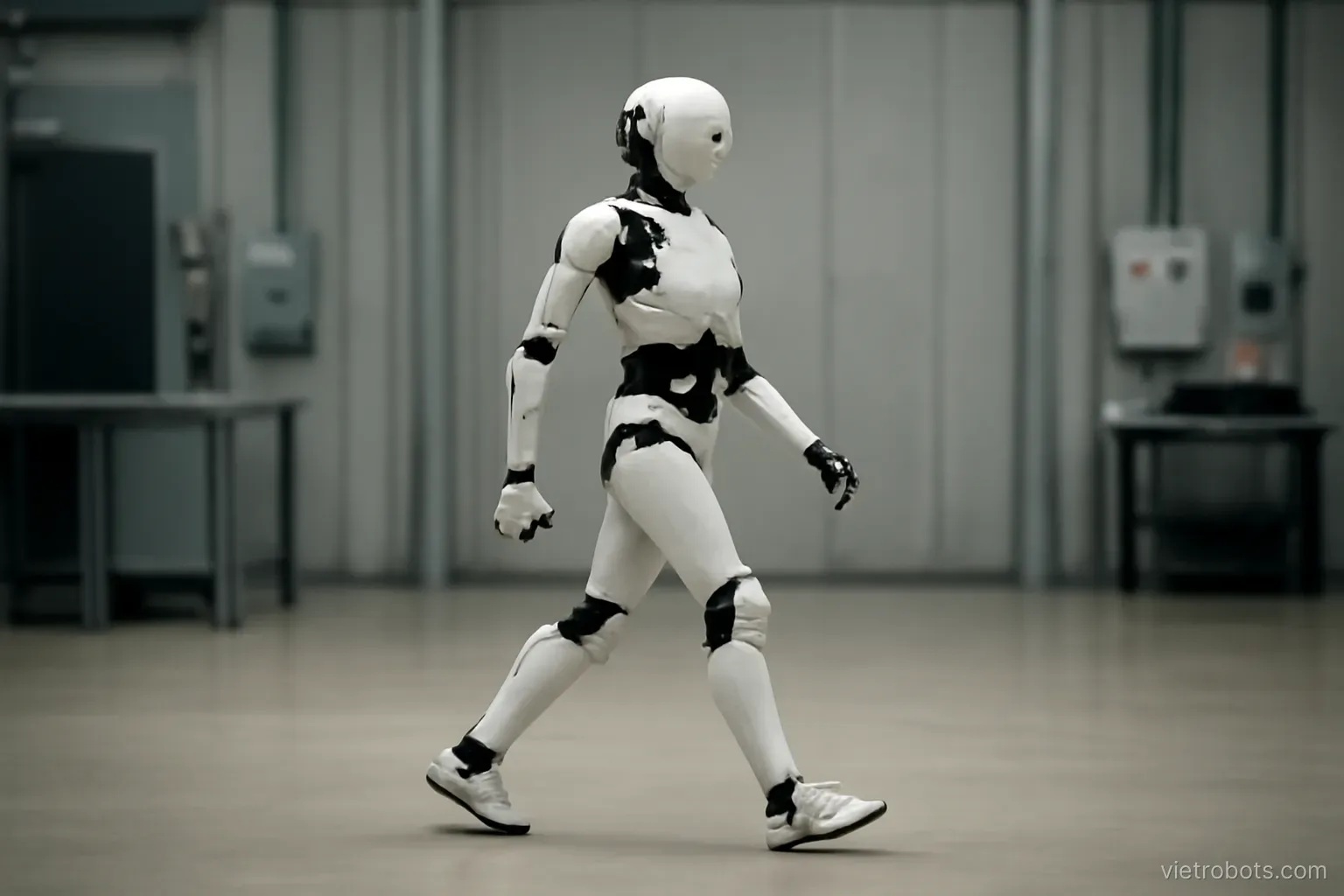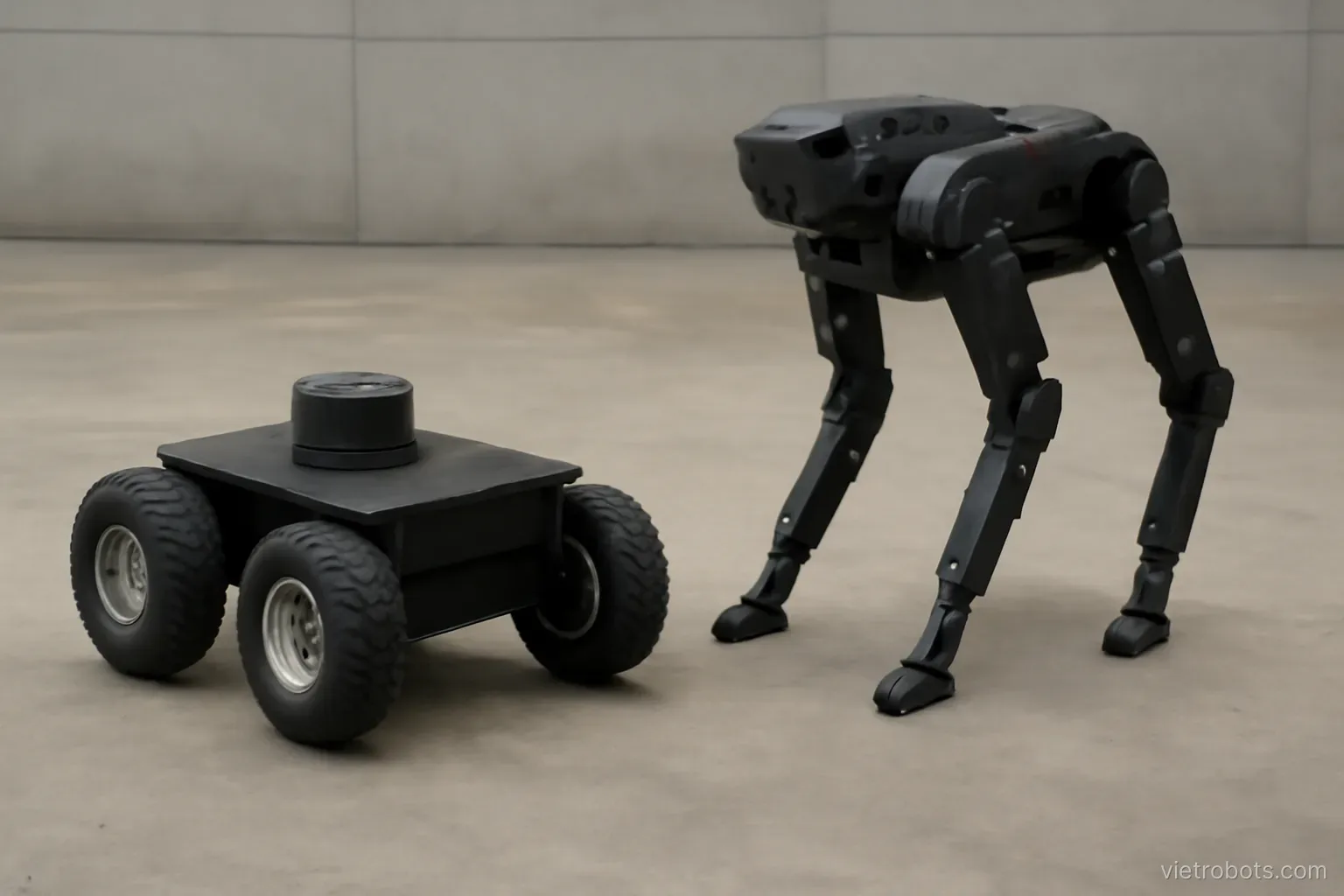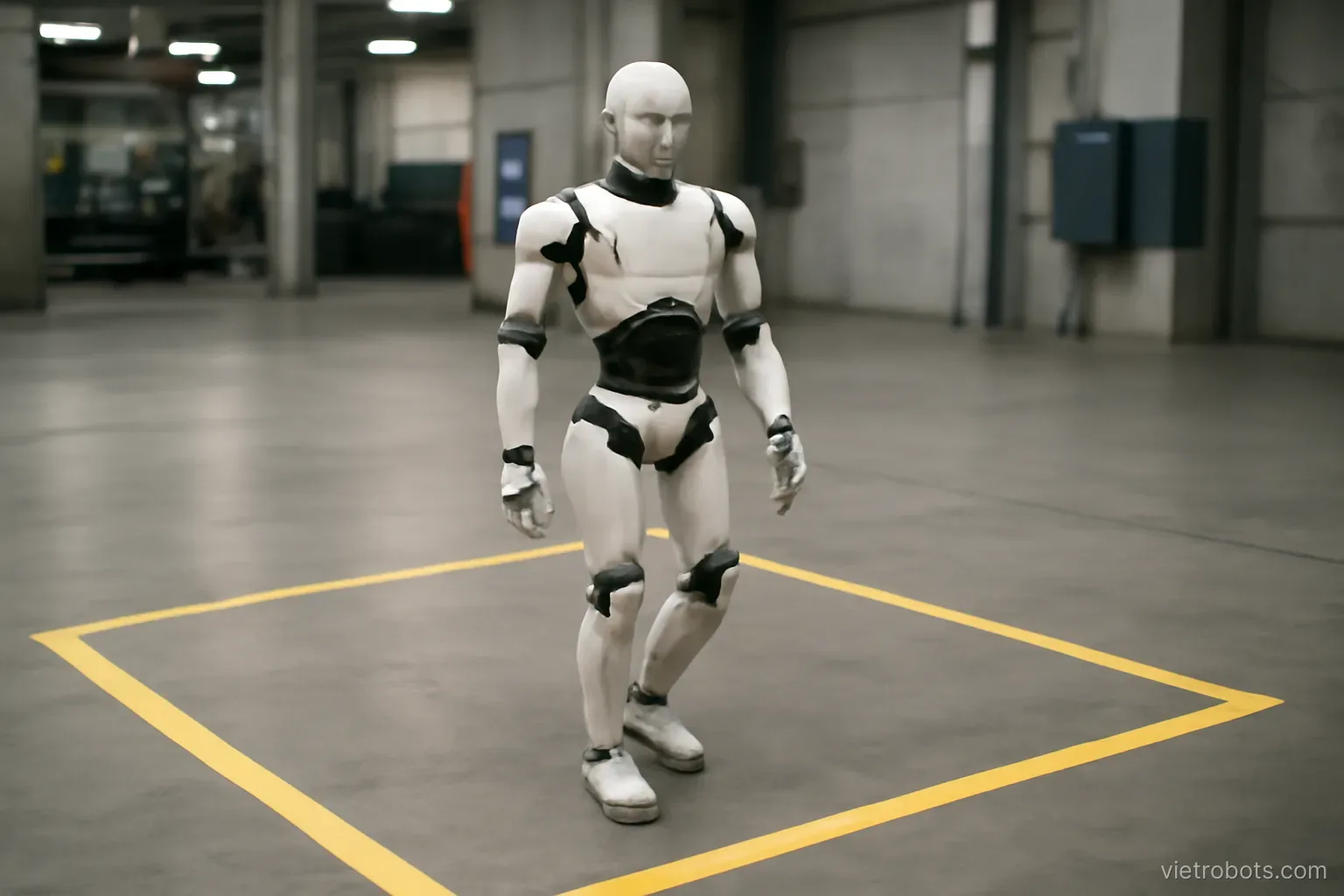
A wheeled service robot that fails simply stops. A legged robot that fails may fall, and a falling machine of significant mass near people is a different category of risk. This is the main safety distinction for the humanoid category.
The falling problem
The risk specific to legged machines.
Why it cannot be eliminated. A legged robot is actively balancing. Any control failure, unexpected disturbance, slippery patch or power interruption can result in a fall.
What a fall involves. Mass moving with momentum, potentially onto a person, onto equipment, or into a display. The energy involved scales with mass and height.
How it is managed. Fall prediction and controlled descent — the robot detecting instability and lowering itself deliberately rather than toppling. Protective structures on the machine. Limiting mass. And keeping distance from people.
What this means in practice. Legged robots in public spaces typically operate within a defined area with a boundary and an attendant. This is not excessive caution; it is proportionate to a risk that has no software solution.
The question to ask a supplier. What happens when it falls, how often has that occurred in operation, and what measures reduce the consequence.
Risks shared with all mobile robots
Less dramatic and more common.
Collision. Contact with a person who did not see the robot, or who moved into its path. Managed by speed limits, sensing and stopping distance.
Trip hazard. A stationary robot in a walkway, or its charging cable across a route. Genuinely the most frequent cause of minor incidents.
Pinch points. Between moving parts, or between the robot and a fixed object. Particularly relevant with arms and grippers.
Dropped items. A robot carrying something that stops abruptly. Relevant where hot or heavy items are involved.
Blocked egress. A robot stopped in a fire exit or corridor. This should be designed against explicitly.
Startle. Not an injury in itself but a cause of falls, particularly among older people. Predictable movement and audible cues reduce it.
Children, older people and crowds
Three groups requiring specific consideration in public deployments.
Children. Will touch, pull, push and attempt to climb. This is not preventable by instruction. Design implications: no accessible pinch points, sufficient stability that pushing does not topple it, and supervision where children are present in numbers.
Older people. Slower movement, possible mobility aids, reduced hearing, and greater consequence from a fall. Robots operating around them should move more slowly and stop earlier than default settings.
Crowds. Sensing degrades when the environment is full of moving people. Most robots handle a corridor well and a packed event poorly. The realistic answer is not to operate autonomously in dense crowds.
Mobility aids and wheelchairs. Sensors may not detect a low wheelchair footplate or a walking frame reliably. Worth verifying rather than assuming.
The general principle. Public deployment safety is determined by the most vulnerable person likely to be present, not by the average one.
Operating rules that work
Practical measures used in real deployments.
Define an operating area. Marked on the floor, understood by staff, and outside the main traffic flow where possible.
Have an attendant for public operation. Not to operate the robot but to manage people around it — crowding, children, and anyone attempting to interfere.
Set speed conservatively. Below the default. The time saved by higher speed rarely justifies the increased stopping distance.
Make state visible. Lights or sounds indicating moving, stopping, waiting. People behave confidently around a machine whose state they can read.
Provide a clear stop. An obvious way for anyone to stop the robot, and staff trained to use it.
Keep routes clear of cables. The most preventable hazard.
Plan for the robot stopping. Where it stops must not block an exit, and staff must know how to move it safely.
What to require of a supplier
Specific and checkable requirements.
A risk assessment for your application. Not a generic one. It should cover your space, your visitors and your tasks.
Stopping distance measured with load at operating speed. Not a catalogue figure.
Documented fall behaviour for legged machines, including frequency in operation.
Verification records for safety functions. Each function tested individually with results recorded.
Operating instructions in the local language, written for the staff who will use it.
A defined procedure for emergencies — how to stop it, how to move it, whom to call.
Confirmation of what it does when a fault is detected. Stopping safely rather than continuing is the required behaviour.
A supplier who provides all seven without prompting has deployed before. One who treats these as unusual requests has not, and that is useful information in itself.
Frequently asked questions
What is the safety risk specific to legged robots?
Falling. A legged robot balances actively, so any control failure, disturbance or power interruption can result in a fall — mass moving with momentum near people, which has no software solution.
What causes most minor incidents in practice?
Trip hazards — a stationary robot in a walkway or its charging cable crossing a route. Less dramatic than collisions and considerably more frequent.
How should public deployment safety be judged?
By the most vulnerable person likely to be present rather than the average one — children who will touch and climb, older people for whom a fall has greater consequence, and users of mobility aids that sensors may not detect reliably.
What should a supplier provide?
A risk assessment for your specific application, measured stopping distance under load, documented fall behaviour, verification records for each safety function, local-language instructions, and an emergency procedure.
More in Robots in Vietnamese business and Cost and selection.