Humanoids are the most expensive and most visible robot category, which makes the buying decision both consequential and easy to make for the wrong reasons. This is a framework for making it deliberately.
Start by naming what you are buying
The decision usually goes wrong here.
If you are buying attention. Brand presence, event impact, visitor photographs, media interest. Legitimate, measurable, and it should be budgeted and measured as marketing.
If you are buying labour. A machine to do physical work. Currently very difficult to justify for a humanoid, because the tasks it can reliably do are done better and cheaper by other form factors.
If you are buying capability for later. A platform to learn on while the technology matures. Legitimate for organisations with a research reason, and it should be recognised as an investment in learning rather than in output.
If you are buying because competitors have one. Worth pausing. Their space, customers and objectives differ, and what works there may not transfer.
Write it down. Which of these it is, in one sentence, before any supplier conversation. That sentence determines every subsequent question.
If the answer is attention
The most common legitimate reason, and it has its own logic.
Rent rather than buy, at least initially. Attention value decays as the novelty fades, so a purchase for this purpose has a limited useful window.
Concentrate the use. Launch events, exhibitions, peak seasons. Spreading it thinly wastes the effect.
Design for capture. Branded backdrop, adequate lighting, a pose, an invitation to photograph, and a way to collect contact details. Without these, the attention generated produces nothing measurable.
Measure it as marketing. Visitors stopping, contacts captured, mentions and shares, dwell time. Compare against what the same spend would produce through other channels.
Account for the decay. Month one always spikes. The figure at month four tells you the sustainable value.
And add a function if possible. A humanoid that also does something useful survives the novelty period; one that only attracts attention does not.
If the answer is work
The case requiring the most scrutiny.
Name the task precisely. Not a category — the specific physical actions, on specific items, in a specific place.
Check it against the capability boundary. Rigid known objects from known positions is feasible. Soft materials, unfamiliar objects, long dependent sequences are not.
Ask what a wheeled robot with an arm could not do. If the answer is nothing, that is the better purchase at a fraction of the cost.
Ask what a specialised machine could not do. Purpose-built equipment beats a general machine at its specialty, usually decisively.
Cost it fully. Purchase, integration, content, maintenance, the owner's time, and reduced availability from shorter runtime.
Divide by tasks completed per year. Then compare with the current method.
Applied honestly, this sequence rules out most work-motivated humanoid purchases today — which is useful information rather than a discouraging conclusion, because it points toward the equipment that would work.
The alternatives worth costing
Always compare against these before deciding.
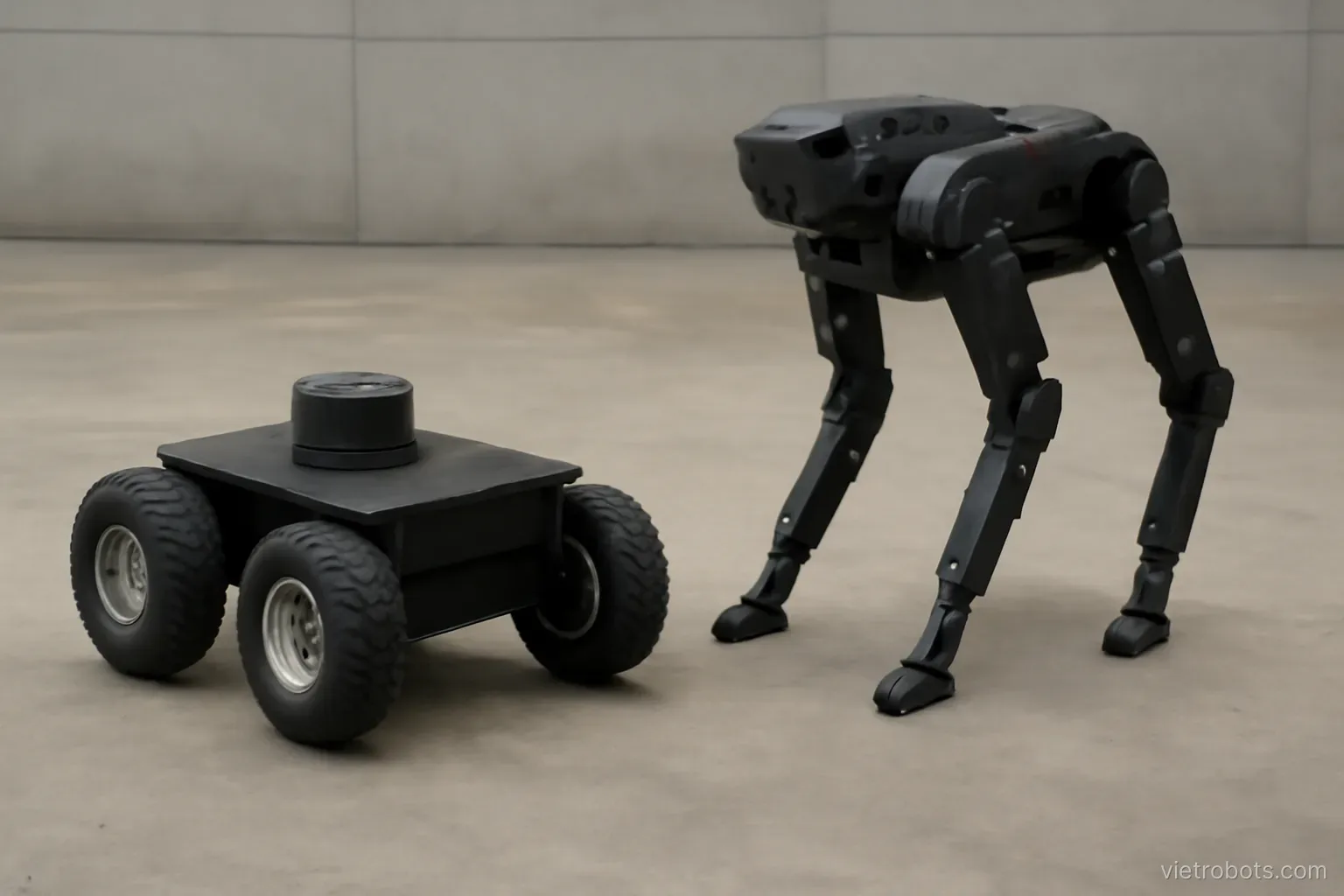
Wheeled robot with a screen. Most of the interaction value, most of the mobility value, a fraction of the cost, and far longer runtime.
Wheeled base with an arm. If manipulation is genuinely needed, this delivers it without the cost of legs.
Fixed kiosk. If the job is answering questions in one place, this does it for a small fraction of the cost.
Renting a humanoid for specific occasions. Captures the attention value without the capital commitment or the ongoing care.
A specialised machine. For a defined physical task, purpose-built equipment usually wins on every measure.
Doing nothing yet. A legitimate option. The technology is improving quickly, and waiting eighteen months costs little in a category where capability is advancing.
Costing all six against the same task, in the same units, is the single most useful exercise in this decision.
Conditions for a sound purchase
If, after all of the above, a humanoid still fits, these conditions should hold.
The purpose is written down and everyone involved agrees on it.
Success criteria exist with a number and a date.
Someone is named to look after it, with the work in their role.
The space has been assessed for the robot's actual dimensions, floor surface and operating area.
A safety assessment covers your application, not a generic one.
You have seen one running somewhere real, not only in a video.
The budget covers the full year, not just the purchase.
You have costed the alternatives and can say why this one wins.
Eight conditions. Meeting all of them does not guarantee success, but organisations that meet them have a markedly different outcome from those that buy on enthusiasm — and the exercise itself usually clarifies the decision well before the last box is ticked.
Frequently asked questions
What should be decided before talking to a supplier?
Whether you are buying attention, labour, or a platform to learn on. Write it in one sentence — that sentence determines every subsequent question and it is where the decision usually goes wrong.
How should a purchase for attention be handled?
Rent rather than buy initially, concentrate use into launches and peak periods, design deliberately for photography and contact capture, and measure it with marketing metrics against what the same spend would achieve elsewhere.
What question tests a work-motivated purchase?
What can this do that a wheeled robot with an arm could not. If the answer is nothing, that is the better purchase at a fraction of the cost and with far longer runtime.
Is waiting a legitimate option?
Yes. Capability in this category is advancing quickly, so waiting eighteen months costs little and may substantially change what is available — which makes doing nothing yet a reasonable decision rather than an absence of one.
More in Robots in Vietnamese business and Local ecosystem.