Most people's mental model of robots was formed by films long before they met one. Ten widely held beliefs, why each is wrong, and — more usefully — the single pattern that connects them.
About what they can do
One: robots can do anything people can, just more slowly. Not so. Some things robots do far better than people — repeating an action precisely, calculating, recalling information. Others they barely do at all — picking up an unfamiliar object, folding cloth, navigating a cluttered room. It is a difference of kind, not of speed.
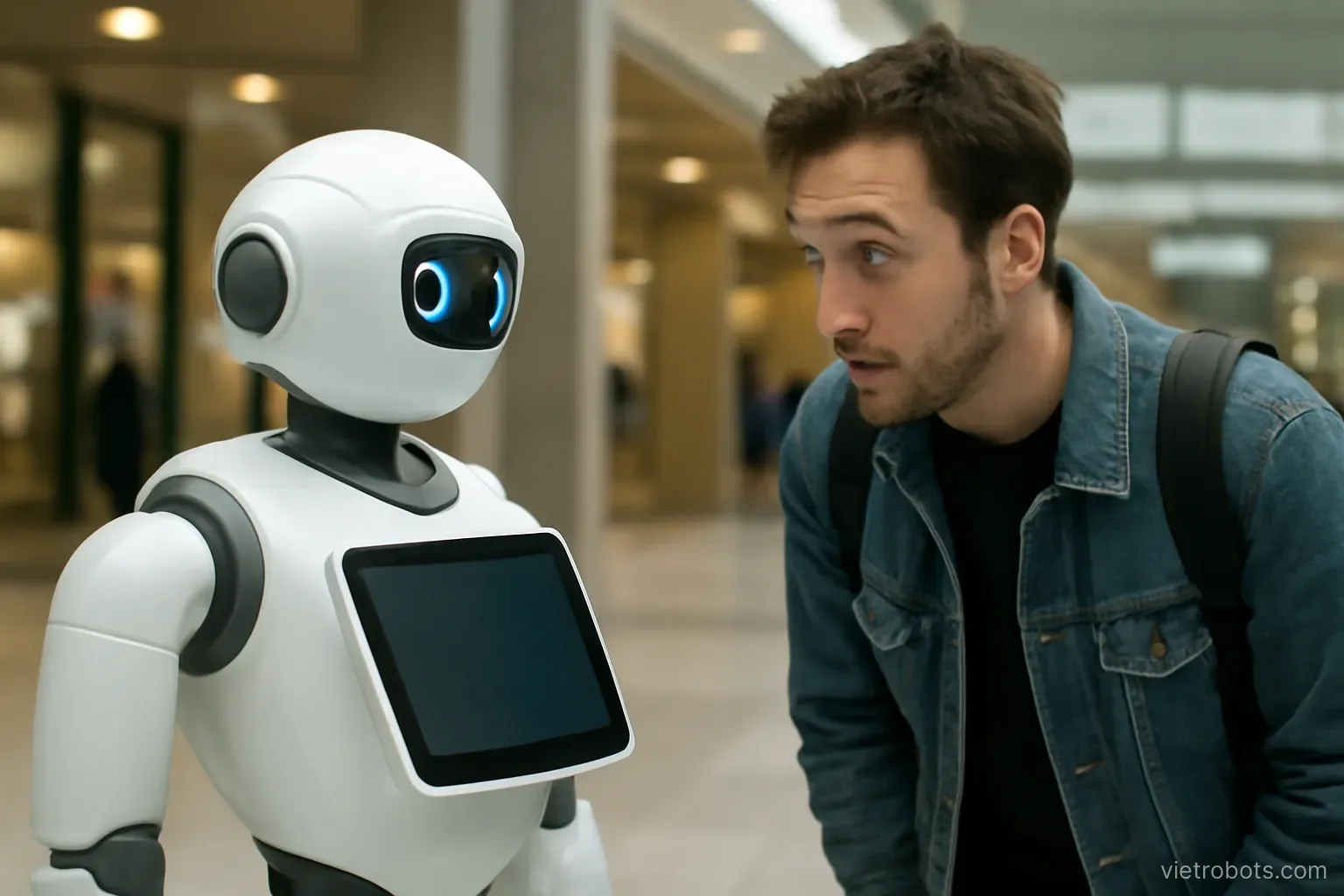
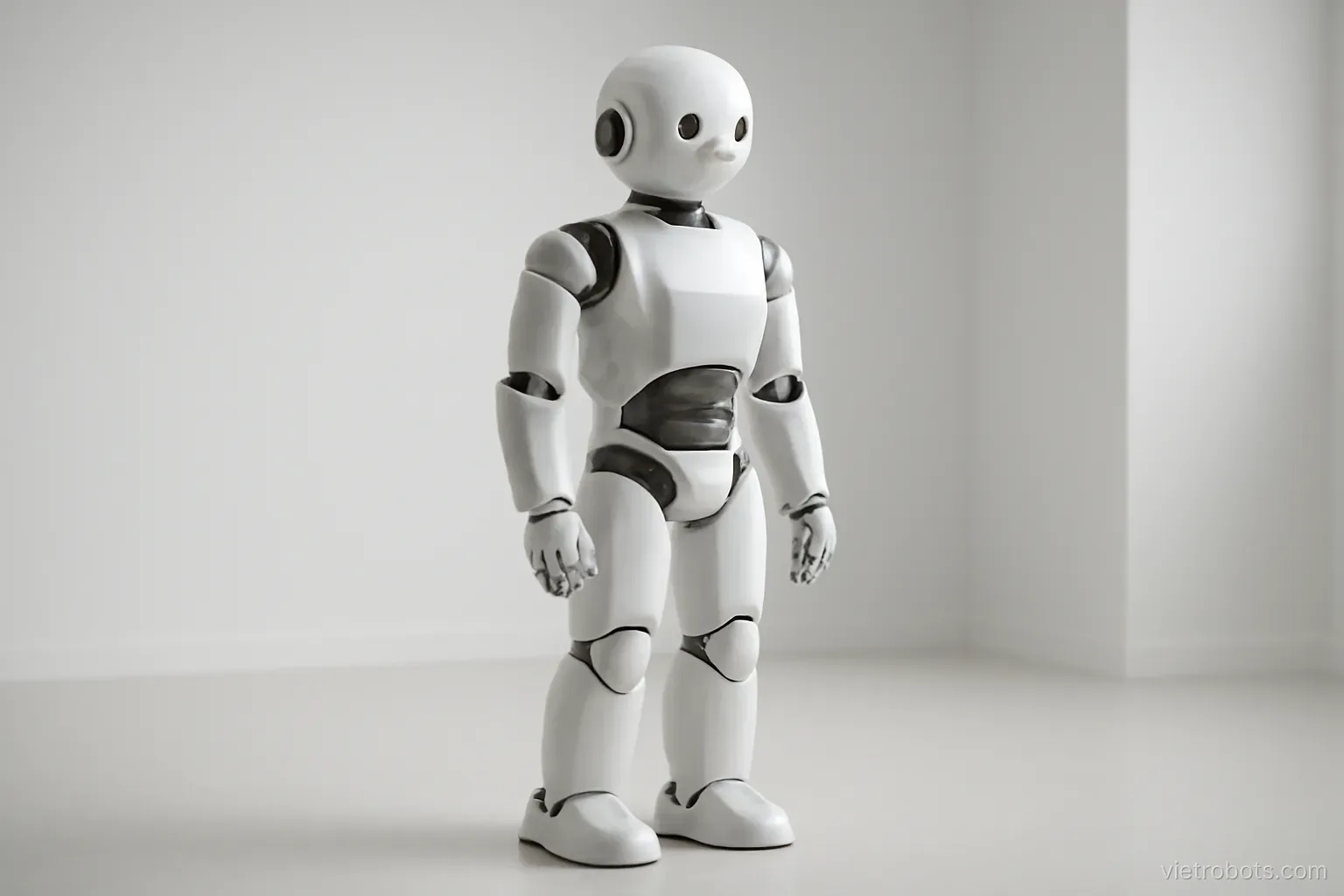
Two: a more human-looking robot is more capable. Unrelated. Form is a design decision. A round vacuum robot may solve a harder problem than a humanoid that only talks.
Three: robots learn by watching. Not yet in any deployable product. Current systems learn from many carefully prepared examples, not from a single observation.
Four: robots do not make mistakes. AI robots make them regularly, and the concerning part is that they do so fluently. Older machines reported an error when they could not proceed; a language model produces a confident answer regardless of whether the content is correct.
About intelligence and awareness
Five: robots have feelings. No. A robot can display emotion — a cheerful voice, a sad expression — but that is programmed output rather than internal state. Children believe this readily and it is worth explaining.
Six: robots think the way people do. No. A language model generates responses by predicting continuations from an enormous body of text. That is a different process from reasoning, and it explains both its strengths and its characteristic failures.
Seven: robots will become self-aware and rebel. This is a film premise. Current systems have no goals of their own and no mechanism by which such goals would form. The genuine risks of AI today are of an entirely different kind — error, bias in data, and deliberate misuse.
Eight: robots understand what they are saying. They process and respond appropriately. Whether that constitutes understanding is an open philosophical question. More practically: a system trained on text has no experience of the physical world, so it discusses objects it has never handled.
About work and society
Nine: robots will take all the jobs. At the level of an individual workplace, what actually happens is different: most deployments do not reduce headcount, people move to other work, and the automated task is usually one that was hard to staff anyway. At an economy-wide level there is displacement — and displacement is not the same as replacement.
Ten: robots are getting cheap so everyone will have one. Hardware prices do fall. But most of the cost of a working robot system is integration, content and operation — skilled labour, which does not fall the way hardware does.
A bonus belief worth naming. That robots run autonomously with no human involvement. Every robot needs someone to charge it, clean it, update it and unjam it. This is the single most common reason robots are bought and then abandoned.
The pattern connecting all of them: each misjudges in the direction of robots being more like people than they are. Noticing that tendency makes every claim in this field easier to evaluate.
Why these beliefs persist
Understanding the mechanism makes it easier to resist.
Fiction came first. Our image of robots formed from stories before we encountered real ones, and first impressions are durable.
Short video is selective. A thirty-second clip may be the fiftieth attempt, and nobody publishes the forty-nine failures.
Marketing language overreaches. Words like intelligent, learns and understands are applied to systems doing considerably less than those words imply.
We anthropomorphise instinctively. People attribute intention and feeling to anything with a face that speaks. This is a feature of human psychology rather than a failure of knowledge, and it operates even in people who know better.
Practitioners discuss limits less. Capability is more interesting to talk about than constraint, so the public conversation skews.
The simplest self-check. When you hear a claim, ask how many consecutive times, with how many different objects, in how many different settings. Those three numbers are usually absent, and their absence is informative.
What to hold instead
Five statements that are accurate and useful.
AI robots today are strong at talking and moving, weak at using hands. This one sentence explains most of the current map of applications.
Fluent is not the same as correct. Applies to robots, to AI assistants, and to people.
There is always a person behind it. Every system was designed, trained and deployed by someone for some purpose. Who built this and why is a durable question.
It knows only what it was given. A robot at one business knows nothing beyond that business.
It needs looking after. No robot maintains itself.
These five require no technical background and they are sufficient to judge almost any situation an ordinary person encounters — including most of what appears in the news about this field.
Frequently asked questions
Do robots have feelings?
No. A robot can display emotion through voice or expression, but that is programmed output rather than an internal state. Children readily believe otherwise and it is worth explaining directly.
Are more human-looking robots more capable?
Unrelated. Form is a design decision about interaction and appearance. A round vacuum robot may be solving a harder problem than a humanoid that only holds conversations.
Will robots take all the jobs?
At the level of an individual workplace, most deployments do not reduce headcount — people move to other work and the automated task was usually hard to staff anyway. Economy-wide there is displacement, which is not the same as replacement.
What pattern connects these misconceptions?
Each misjudges in the direction of robots being more like people than they are. Noticing that tendency makes every claim in the field easier to evaluate.
More in Voice and language and Robots in Vietnamese business.