Someone asks what a robot actually is, or whether the one in the restaurant can think. Answering well means being accurate without jargon and honest without alarming — and there is a way to do it in about three sentences.
Start from something they already know
Far more effective than explaining from first principles.
For anyone who uses a phone. It is like search on your phone — you ask a question, it finds an answer. The difference is that this one listens and speaks instead of you typing.
For anyone who uses voice control. Same thing, put inside a body that can move.
For anyone who uses household appliances. A washing machine does what you set it to do. This does the same, only what it was set to do is much more elaborate.
For anyone from farming or manufacturing. Machines that took over physical work. This one moves itself and avoids obstacles.
The principle. Do not open with the phrase artificial intelligence. It explains nothing and it makes the listener feel the subject is beyond them from the first sentence.
Three sentences that cover it
If only three sentences are available, use these.
One: it is a machine, built by people, doing what people taught it. This removes most of the fear and most of the confusion about awareness.
Two: it knows what was loaded into it and nothing else. This explains why the robot at one shop knows that shop's menu and nothing about anything else.
Three: it speaks very smoothly but it can be wrong, so check anything important with a person. The most practically useful of the three.
These are technically accurate, easily understood, and sufficient for the listener to behave sensibly around a robot. Everything else is detail.
If they ask more, go further. Saying too much at once produces less retention, not more, and it makes the subject feel harder than it is.
Answering the usual questions
Does it think? Not the way we do. It works from what it learned — a bit like having memorised an enormous amount and putting pieces together — rather than sitting and reasoning.
Does it know who I am? No, unless you tell it. And it does not remember you from last time.
Is it listening to me? It listens when you speak to it. Whether it records depends on how the place set it up, and you can ask. Best not to say anything private to it.
Will it take my children's jobs? It can do some repetitive tasks. Work needing skilled hands or understanding people is much harder for it.
Is it dangerous? The ones in restaurants and hotels are not — they move slowly and stop for people. Just take care not to trip over one.
Does it cost anything to talk to? No, it belongs to the business.
Short answers. If they want more they will ask, and answering the question actually asked works better than pre-empting the next one.
Phrasing to avoid
Common formulations that create wrong impressions.
It is very intelligent. Suggests reasoning. It remembers a lot and answers quickly is closer.
It teaches itself. Implies independent change. It is trained and updated by people.
It understands you. It works out what you want is nearer the mark.
Eventually it will do everything. Inaccurate, and it produces anxiety without any useful response.
You would not understand. Ends the conversation, and ending the conversation is how the misunderstanding persists.
What works instead. Concrete examples the listener has encountered. Showing them one if the opportunity arises. And best of all, letting them try speaking to one themselves — direct experience works better than any explanation.
Letting them try it
The most effective approach and the least used.
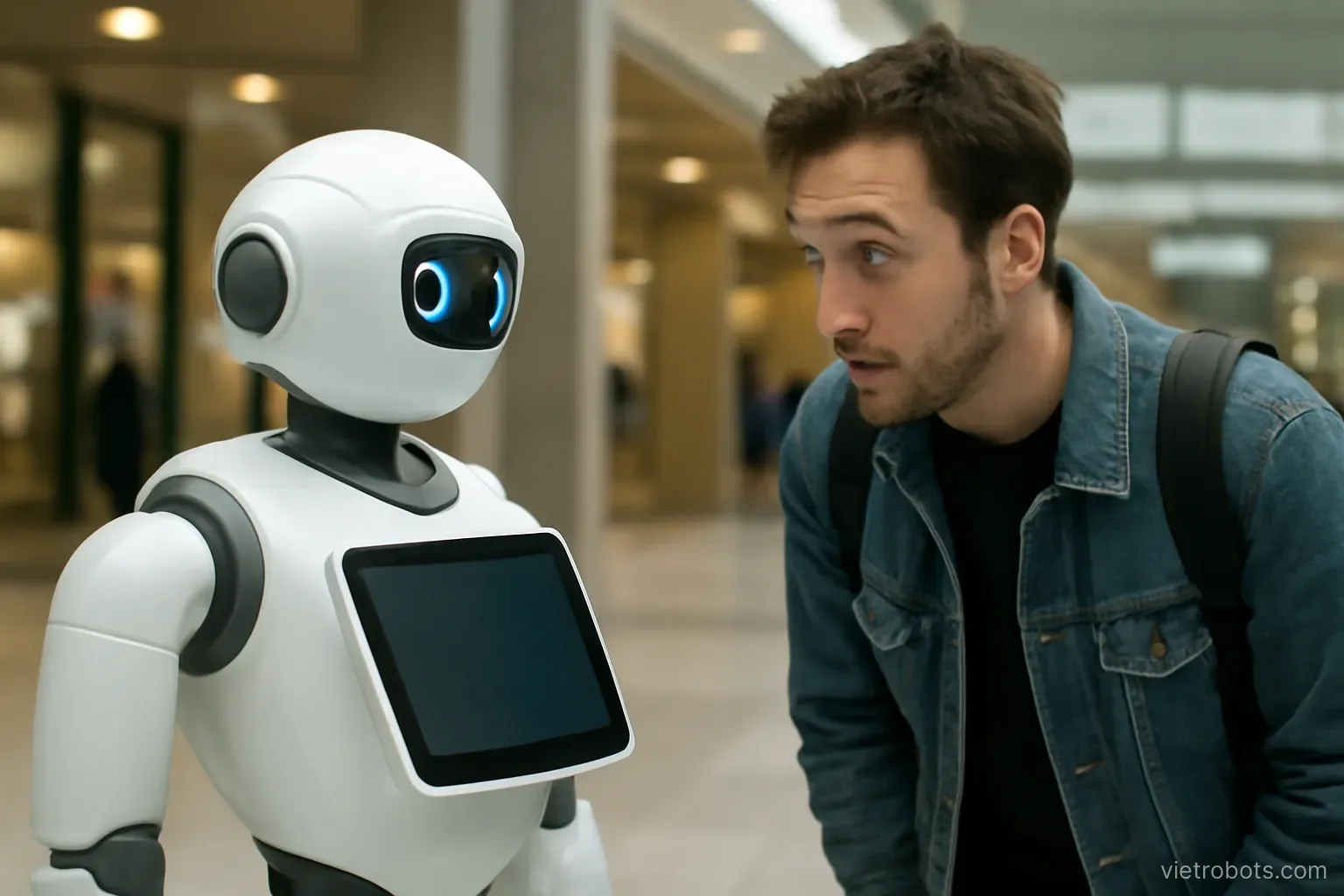
Take them where there is one. A restaurant, a hotel lobby, a shopping centre. Let them see it working as an ordinary part of the environment.
Encourage one question. Something simple. Speaking to it themselves and hearing it respond removes a great deal of strangeness.
Do not push. If they prefer to watch, let them. Many people are reluctant to speak to a machine in front of others, and that is reasonable.
Mention beforehand that it may mishear. So that if it does, they do not conclude the fault is theirs. This matters particularly with older people, who blame themselves readily.
Point out the button to call a person. So they know there is always a way out.
Ask afterwards what they thought. The answers are usually direct, and they sometimes identify things that people familiar with the technology have stopped noticing.
Frequently asked questions
How should an explanation start?
From something the listener already uses — phone search, voice control, household appliances, farm machinery. Not with the phrase artificial intelligence, which explains nothing and makes the subject feel out of reach.
What are the three sentences that cover it?
It is a machine built by people doing what people taught it; it knows what was loaded into it and nothing else; and it speaks smoothly but can be wrong, so check anything important with a person.
Which phrasings should be avoided?
That it is very intelligent, that it teaches itself, that it understands you, and that eventually it will do everything. Also the phrase you would not understand, which ends the conversation and preserves the misunderstanding.
What works better than any explanation?
Letting them ask a robot a question themselves. Mention beforehand that it may mishear, so if it does they do not conclude the fault is theirs — which older people do readily.
More in AI robots for real work and Robots in Vietnamese business.