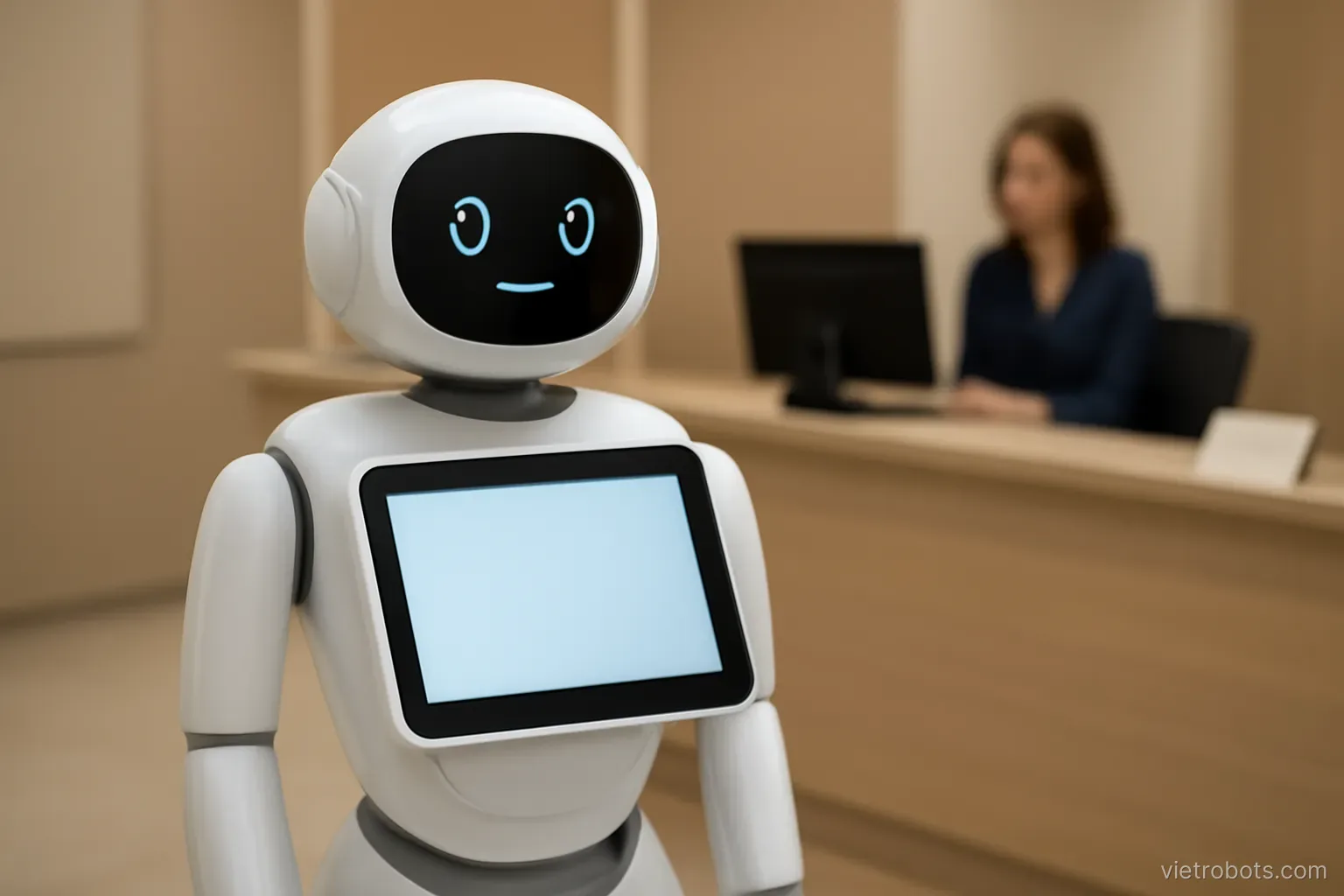
A robot giving wrong answers is usually not a technical failure. It is a robot faithfully repeating information that was correct when it was loaded and is no longer correct now — and that is an organisational problem with an organisational solution.
Why content goes stale
The mechanism is always the same and always avoidable.
Information changes constantly. Prices, hours, staff, procedures, promotions, product availability.
The change happens somewhere else. A price is updated in a system, on a website, on a printed sheet — and the robot is not on that list.
Nobody notices immediately. The robot keeps working and keeps sounding confident. There is no error message for outdated information.
Customers rarely complain. Most simply act on the wrong information and discover the problem later, or quietly go elsewhere.
Discovery is usually accidental. Someone overhears a wrong answer, or a customer arrives expecting something that is no longer true.
The critical property: stale content produces no signal. Unlike a hardware fault, nothing announces it. This is why a deliberate process is required rather than reliance on noticing.
Attach updates to existing processes
The single most effective measure.
The principle. Updating the robot should be a step inside the process that changes the information, not a separate task afterwards.
In practice. The checklist for changing a price includes the robot. The procedure for adding a service includes the robot. The routine for changing opening hours includes the robot.
Why this works. Separate tasks get forgotten when people are busy. Steps within an existing process do not, because the process is already being followed.
Identify the processes. List everything that changes information the robot uses, and find where each change is currently made. Add a step at each point.
Make the step small. If updating the robot takes twenty minutes, it will be skipped. If it takes two, it will not. This is a reason to prefer products with a simple content interface.
Assign it by role, not by name. The person who changes prices updates the robot's price content, whoever that person happens to be this month.
Verification that catches what slips through
Processes leak, so verification is needed as well.
Weekly spot check. Ask the robot ten common questions and listen to the answers. Ten minutes, and it catches most drift.
Monthly full review. Read the entire content set, including items nobody reported as changed. Something is always out of date.
Standard test set. Twenty to thirty questions with known correct answers, run after any significant content change.
Conversation log sampling. Twenty random conversations a week, read and marked. This catches wrong answers customers did not complain about.
Unanswered question list. Reviewed and cleared regularly. A growing list is an early warning that nobody is maintaining the content.
Staff reporting channel. Simple enough to actually be used. Staff nearby hear wrong answers before anyone else does.
Of these, conversation log sampling is the highest value, because it is the only method that finds errors nobody reported.
Structure content to reduce the problem
Some structural choices make staleness less likely.
Separate volatile from stable content. Company background changes rarely; prices change weekly. Keeping them separate means updates touch a small, well-understood area.
Date volatile items. An effective date on price and promotion content makes it obvious when something needs checking.
Avoid duplicating facts. If the same figure appears in three places, one day they will differ. One source, referenced from elsewhere.
Prefer ranges to exact figures where appropriate. Where prices change frequently, having the robot give a range and invite confirmation avoids a class of errors entirely.
Remove content for discontinued items. Retaining it just in case makes retrieval less accurate and creates opportunities for wrong answers.
Connect to live systems where the effort is justified. Stock levels, availability and pricing pulled from a system cannot go stale. This is the structural solution where it is feasible.
When a wrong answer reaches a customer
It will happen. What matters is the response.
Fix the content immediately. Before investigating anything else, correct the information.
Find out how it got stale. Which change was made without updating the robot, and where in the process the step is missing.
Fix the process, not just the instance. Correcting one entry without closing the gap guarantees a repeat.
Contact the customer if they can be identified and were affected. Direct acknowledgement resolves most situations.
Record it. What was wrong, for how long, how it was found. This record shows which content areas are most prone to drift.
Consider whether the robot should have been answering at all. Some categories — firm commitments, prices in volatile markets — may be better transferred to a person by configuration.
And a framing worth holding: the robot is the organisation's voice. Information it gives is information the organisation gave, and that responsibility cannot be delegated to the machine.
Frequently asked questions
Why is stale content so hard to notice?
Because it produces no signal. Unlike a hardware fault, nothing announces it — the robot keeps working and sounding confident, and most customers act on the wrong information rather than complaining.
What is the single most effective preventive measure?
Making the robot update a step inside the existing process that changes the information, rather than a separate task afterwards. Separate tasks get forgotten when people are busy; steps in a followed process do not.
Which verification method finds the most?
Sampling conversation logs — reading twenty random conversations a week. It is the only method that finds wrong answers nobody complained about, and those are the majority.
What structural choice eliminates a class of errors?
Connecting to live systems for stock, availability and pricing, so the information cannot go stale. Where that is not feasible, having the robot give ranges and invite confirmation achieves something similar.
More in Myths and questions and Humanoids at work.