Across sectors, the first robot a business deploys tends to fall into a small number of categories. The consistency is informative — it reflects which applications have conditions favourable enough to succeed without prior experience.
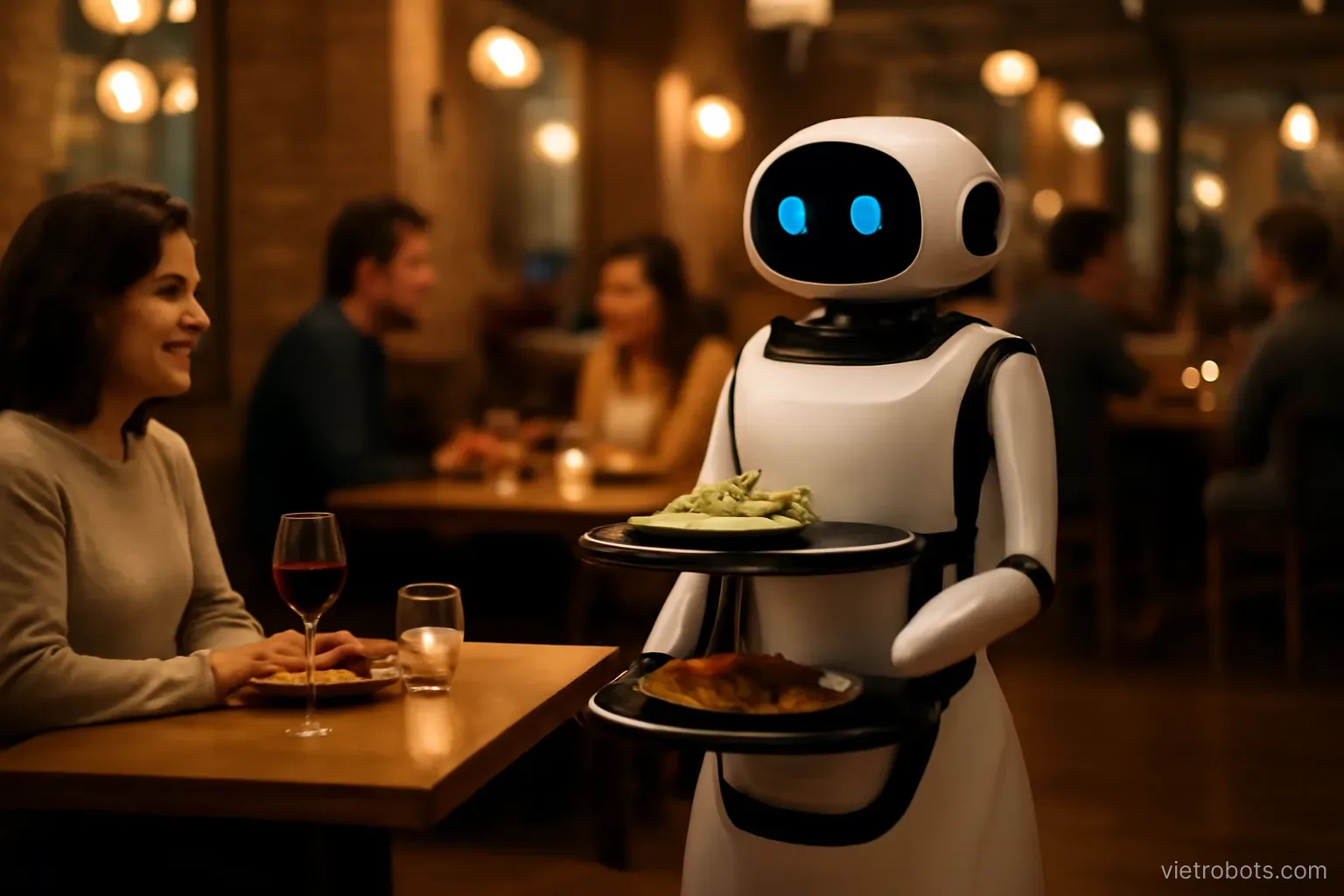
Food service: carrying dishes
The most visible category and the one most people encounter first.
Where it works. Large venues with substantial distance between kitchen and seating, wide straight aisles, single level, and consistent volume. Hotpot and barbecue restaurants and large family venues fit particularly well because dishes travel on large trays and diners are used to handling them.
Where it does not. Small venues where the kitchen is close to the tables. The distance saved is the entire value, and without distance there is none.
What the robot does not do. Take orders, clear tables, take payment, or place dishes on the table. Staff numbers do not reduce; walking distance does.
The main practical obstacle. Chairs pulled into the route. This causes more stoppages than any technical factor and it is solved by layout rather than by equipment.
The honest assessment. Genuine operational value in large venues, primarily attention value in small ones — and the two should be evaluated differently.
Hospitality: delivery and reception
The category with the most favourable conditions.
Why hotels suit robots. Wide straight corridors, flat floors, repeated routes, and guests who generally find it interesting rather than intrusive.
Room delivery. The clearest case, and the value concentrates overnight when staffing is minimal and every delivery leaves the desk unattended.
Reception support. Answering recurring questions and assisting international guests. The multilingual capability is the strongest single argument in tourist areas.
The critical technical question. Lift integration. Without it, a delivery robot serves one floor. The integration cost is significant and it is routinely omitted from budgets.
Where it does not fit. Premium properties where guests are paying for personal service, and where a robot may read as cost-cutting.
The overlooked factor. Guests must know the service exists. A card in the room raises usage more than any technical improvement.
Retail and property: presence and information
Where attention and information value combine.
Showrooms. Answering specification and price questions, comparing products, directing visitors, and capturing details. Particularly valuable at peak times when staff cannot attend everyone.
Property sales galleries. The repetitive first half of a sales conversation — sizes, prices, timelines, amenities — handled consistently, freeing agents for the part requiring judgement.
The consistency benefit. Every visitor receives identical information. Staff giving different answers about the same detail is a genuine source of complaint in these sectors.
The reticent customer effect. Some visitors avoid sales staff to avoid being pursued. A robot gives them a way to get information without commitment, and it reaches people who would otherwise leave without engaging.
The hard boundary. No commitments on price, discount or timeline. This must be configured firmly rather than left to the model's judgement.
Manufacturing: end of line
The industrial equivalent of a favourable first application.
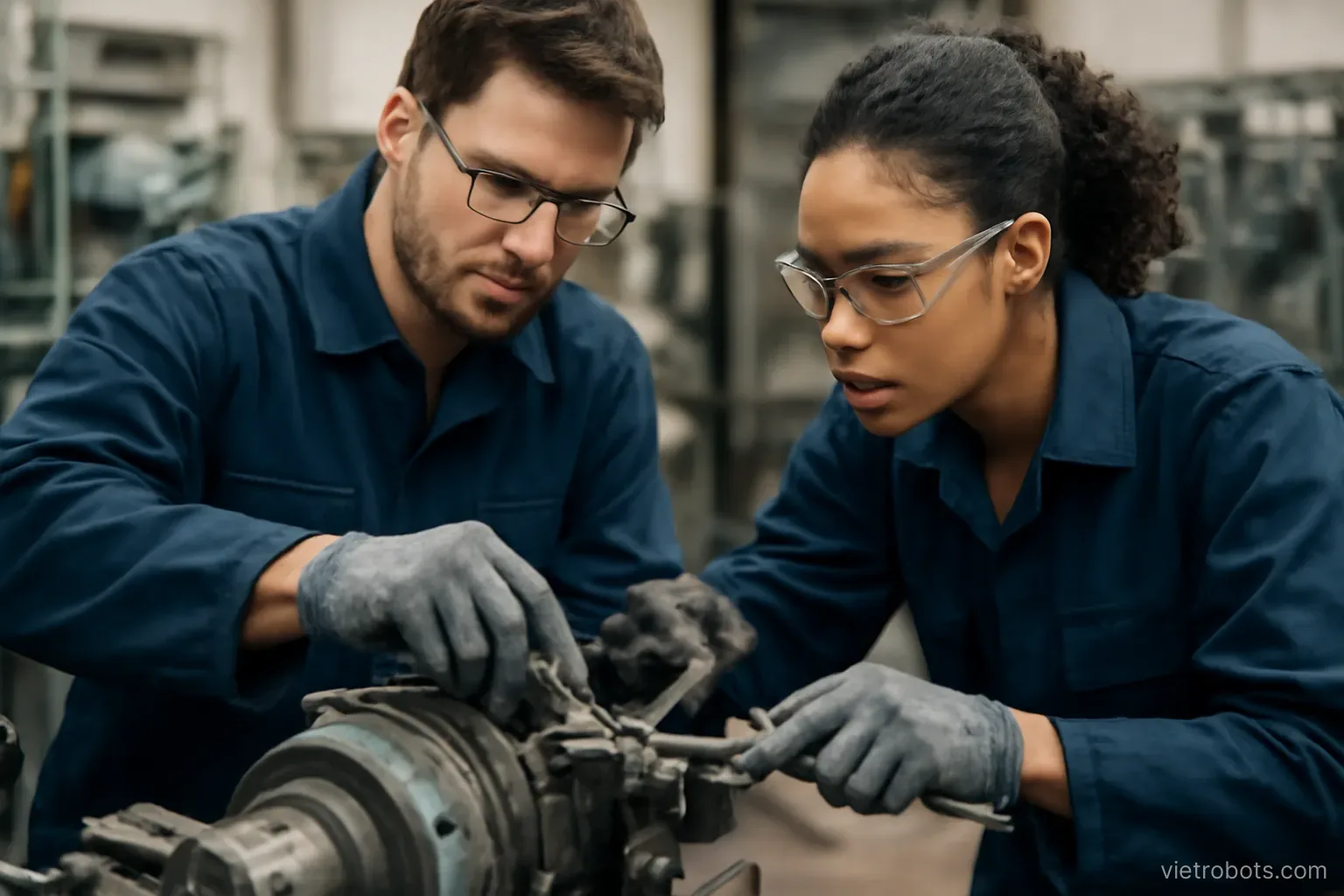
Why end of line. Palletising and packing are self-contained, high volume regardless of product variety, physically demanding, and among the hardest roles to staff.
The measurable case. Everything produced passes through, so volume is guaranteed. And the manual alternative reliably causes back injuries, which is a cost that exists whether or not it is calculated.
The usual obstacle. Floor space at the end of a line, which is always constrained. This blocks more projects than payback calculations do.
The frequent discovery. Automating this step reveals that packaging is less consistent than anyone had measured, because people compensated automatically. Fixing that upstream also reduces transport damage.
Why it makes a good first project. The scope is contained, the result is measurable in pallets per shift, and a manual fallback exists if the equipment stops.
What the pattern shows
The common properties across all four.
A contained scope. Each is one clearly bounded task rather than a process spanning several areas.
An environment that can be prepared. Route marking, layout adjustment, defined stopping points. All four permit this.
Measurable output. Trips, deliveries, questions handled, pallets built. A first project needs a number.
A manual fallback. If the equipment stops, work continues. This removes most of the risk from a first attempt.
Difficult-to-staff work. All four address roles that are hard to fill, which makes the case easier internally as well as financially.
Applied as a test for any proposed first project: if it lacks two or more of these five properties, it is a poor first choice regardless of how valuable it would be if it worked. The first deployment should be chosen to teach the organisation cheaply, not to capture the largest available return.
Frequently asked questions
Does a serving robot reduce restaurant staffing?
No. It reduces walking distance, not headcount — it does not take orders, clear tables, take payment or place dishes on tables. The value is staff spending more time with guests rather than in transit.
What is the critical technical question in hotels?
Lift integration. Without it a delivery robot serves a single floor, and the integration cost is significant and routinely omitted from budgets. It should be the first question asked of any supplier.
Why is end of line the strongest industrial first project?
It is self-contained, high volume regardless of product variety, physically demanding and hard to staff. The scope is contained, output is measurable in pallets per shift, and a manual fallback exists.
What test should a proposed first project pass?
Contained scope, preparable environment, measurable output, a manual fallback, and work that is difficult to staff. Missing two or more of these five makes it a poor first choice however valuable it would be.
More in Humanoids at work and AI robots for real work.